
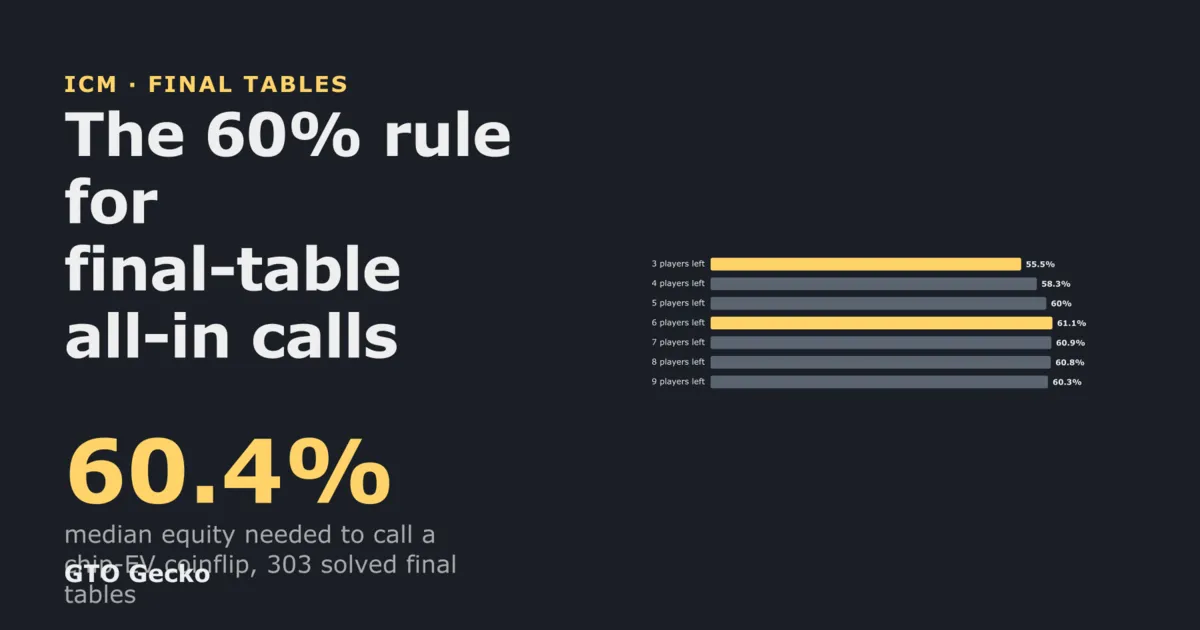
How much equity do you need to call an all-in at a final table? Across the 303 final tables in our ICM library, the median answer is 60.4%, not the 50% that chip math suggests. With three players left it drops to 55.5%; from six players up it sits around 61%, and a middle stack facing the chip leader can need more than 70%.
The numbers in one place
- 60.4%: median equity needed to call a shove that would be a coinflip in chips (8,830 player pairs).
- 55.5% three-handed, 61.1% six-handed.
- 62.5% when the shover covers you, 57.4% when you cover the shover.
- 72.4%: the worst pair in the library, a 30bb stack calling a 63bb chip leader six-handed.
Transcript
How much equity do you need to call an all-in at a final table? Across three hundred and three solved final tables, the median answer is sixty point four percent, not fifty. Three-handed, it drops to fifty-five and a half. Middle stacks pay the most: at six-handed tables the fourth stack needs sixty-three percent. And a thirty big blind stack facing the chip leader needs seventy-two.
Why isn't 50% enough?
Because at a final table a chip you lose costs you more prize money than a chip you win earns you. The ratio between the two is the bubble factor. A bubble factor of 1.52, the median in our library, means losing an all-in hurts 1.52 times as much as winning it helps, so a call needs 1.52 / 2.52 = 60.4% equity to break even in prize money. If the idea is new, our guide to ICM in poker walks through it with a worked example.
Three-handed calls need five points less
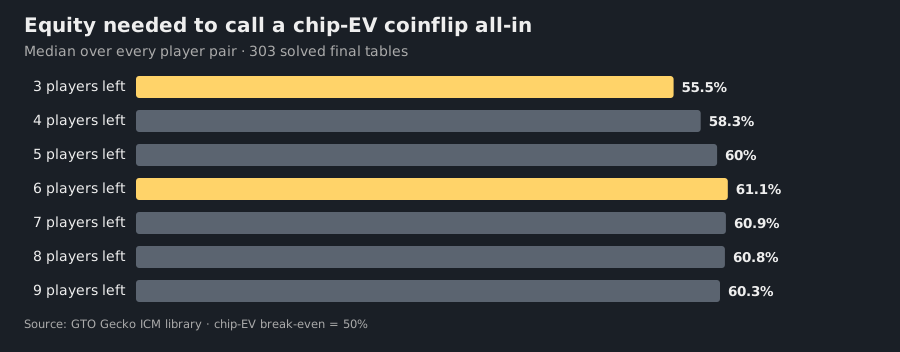
Yes, up to about six players. Three-handed, the median call needs 55.5%. Four-handed it is 58.3%, five-handed 60.0%, and from six players up it levels off between 60.3% and 61.1%. With three left, most of the prize pool's big jumps are already behind you, so the penalty for busting shrinks.
Which stack pays the most ICM tax?
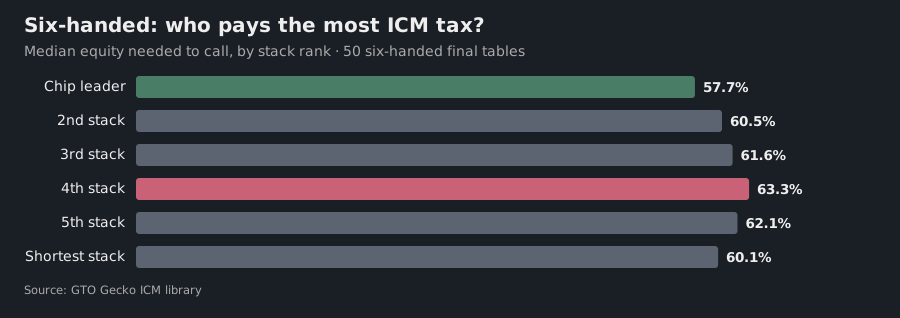
The middle stacks. At six-handed tables the chip leader needs 57.7% to call, the shortest stack 60.1%, and the fourth-biggest stack 63.3%. The middle stacks have the most to lose: they are close enough to the short stacks to move up the pay ladder by folding, and they can be knocked out by the bigger stacks.
Whether the shover covers you matters even more than your rank. When the opponent has more chips than you, the median call needs 62.5%. When you have them covered, it needs 57.4%. That five-point gap is the whole logic of final table pressure from the big stack.
One table, a 16-point gap between two players
Here is the table with the most extreme pair in the library: six players with 30, 10, 63, 14, 7 and 26 big blinds. Read a row as "this player calling off chips against that player".
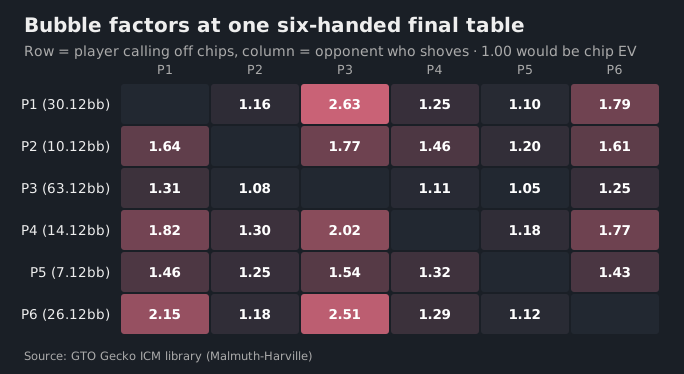
The 30bb stack (P1) facing a shove from the 63bb leader (P3) has a bubble factor of 2.63, so it needs 72.4% equity. At 72.4%, even a hand that is a clear 2-to-1 favourite (66.7%) is a losing call. Turn it around and the leader calling P1 needs only 56.7% (bubble factor 1.31). Same two players, same chips, a 16-point difference in what each needs.
How do you use this at the table?
- Start from 60%, not 50%. At a final table with five or more players, assume a call needs about 60% equity before you look at the details.
- Add for being covered, subtract for covering. Facing a bigger stack, think 62–63%; against a smaller stack, about 57%.
- Middle stacks tighten up the most. If two stacks are much shorter than you, your calls against the big stacks need 63% or more.
Want to check your own instincts? ICM Trainer drills 504 solved final-table setups like these. For a single hand where these numbers flip a decision, see how a folded stack changes an all-in call; for the app itself, how ICM Trainer's Quick Play runs work.
Where these numbers come from
We took the final-table stage of every table setup in GTO Gecko's ICM library: 303 tables from 3 to 9 players, 8,830 caller-and-shover pairs, Malmuth-Harville ICM with the payout structure of a 1,000-player tournament. "Equity needed" is bubble factor / (1 + bubble factor): what a call must win to break even in prize money when it would break even at 50% in chips. We recomputed the example table's equities and bubble factors from scratch and matched the library to three decimals. How GTO Gecko's solutions are made covers the setup. Drafted with AI assistance from the library export; every number was re-read from the source data on October 11, 2026.
Limits: medians hide spread (the middle 80% of pairs need between 54.2% and 65.1%); a different payout structure, a satellite or a bounty changes the numbers; and future skill edge, which ICM ignores, matters for real decisions.
Sources accessed : GTO Gecko ICM library (final-table stage, 303 setups); Independent Chip Model (Wikipedia); ICM Trainer on the App Store.