
Can You Round Poker Solver Frequencies? An Exact River Test
Test 1-, 5-, 10-, 25- and 50-percentage-point frequency grids in an exact river game. Compare rounded-profile EV with both best responses and exploitability.
Deep dives into poker theory concepts including blockers, equity, and game theory.
← All Articles
Test 1-, 5-, 10-, 25- and 50-percentage-point frequency grids in an exact river game. Compare rounded-profile EV with both best responses and exploitability.

Update a poker range after a bet by multiplying each combo’s reach weight by its action frequency. A 27-combo river example shows blocker-aware posterior bluff shares and call EV.
Run a public 100,000-iteration Kuhn Poker CFR lab, compare current and average strategies, and audit exploitability with exact best responses.

Equal-rank poker hands can get different solver frequencies. Use four tests for real state differences, complete suit relabeling, and convergence uncertainty.
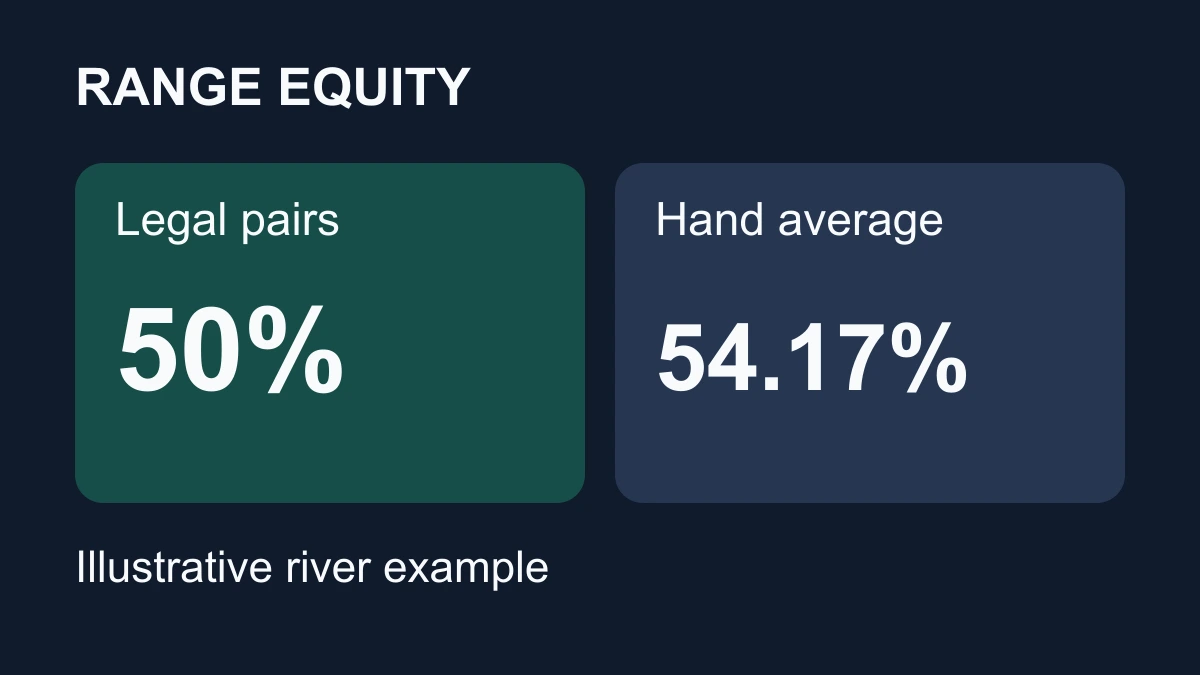
Why can a range show 50% equity when its hand equities average 54.17%? Audit compatible matchups with a complete river example and reproducible data.

Learn what hand histories can test about poker shuffle fairness, run an exact pocket-pair check, and see why statistics cannot certify an RNG.
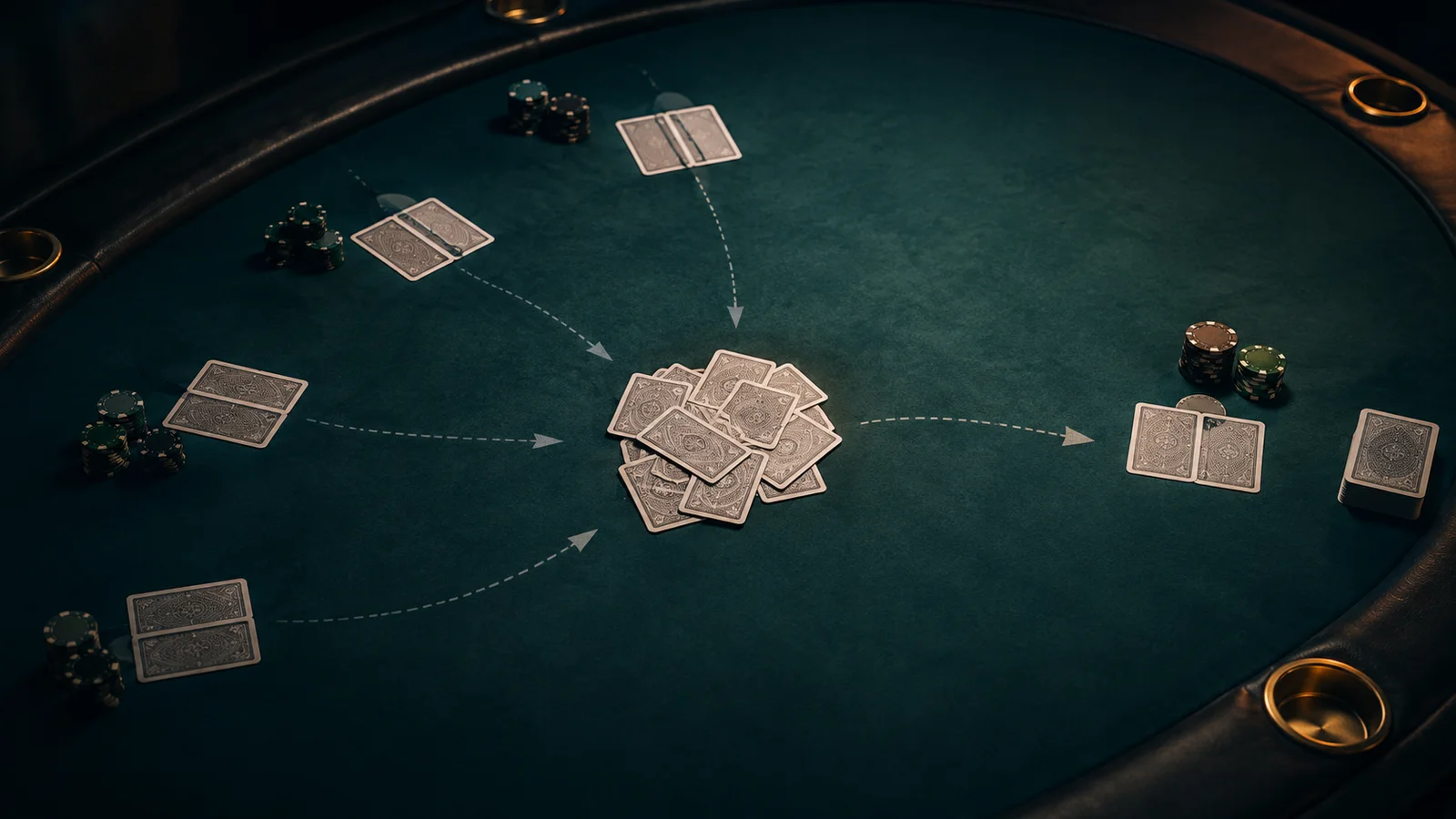
See when preflop folds change the conditional mix of unseen cards, using a reproducible 6-max, 8-max, and 9-max simulation with controls.

Blockers and unblockers explained: how card removal shapes bluff selection, value bets, and hero calls, with solver-backed examples you can apply tonight.