

Under the tournament baseline below, if a non-all-in Hold’em showdown needs an enforced order, the last river bettor or raiser shows first. If the river checks through, use the first remaining player clockwise after the button. A turn bet does not carry that priority into a checked river. PokerStars’ showdown-order explanation also gives this river-based distinction.
A contested tournament all-in uses a different starting question: has all betting for the hand finished? Under 2026 WSOP tournament Rule 70, remaining hands turn face up when someone is all-in and betting is complete. That can happen before the river. An uncalled shove that makes everyone fold has no showdown.
This guide uses ordinary Hold’em and the published 2024 Poker TDA rules as its tournament baseline. Confirm the event’s adopted rules; a cash room or online client can have different procedures. Special hand-for-hand reveal holds can also require waiting for staff. Our examples assume no such hold and are constructed review exercises, not reported hands or official rulings.
Find the fact that changes the answer
Write the last action before deciding who should show. “I called” leaves out the street, any subsequent raise, whether someone was all-in and whether other players could still bet. Those omissions can put the same sentence into different branches.
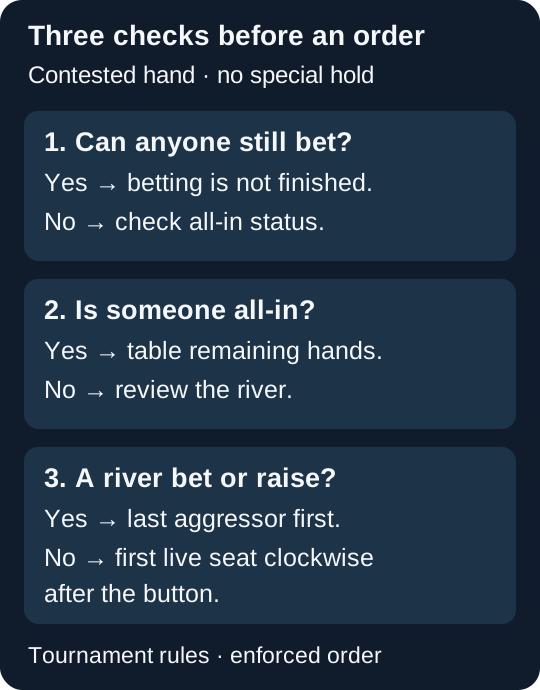
Pair 1: the same bettor, a different final street
A sits immediately clockwise after the button; B is next. Only A and B remain. Neither is all-in. Both retain their cards and neither volunteers to show. Each row starts a separate synthetic hand.
On a narrow screen, scroll the table to read the answer column.
| Case | Action record | First to show if order is enforced |
|---|---|---|
| R1 | River: A checks, B bets, A calls. | B |
| R2 | Turn: A checks, B bets, A calls. River: A checks, B checks. | A |
| R3 | River: A bets, B raises, A calls. | B |
R1 and R2 differ in the street carrying B’s bet. R3 checks another common recording error: the first bettor and the last aggressor need not be the same person. These applications follow PokerStars’ worked explanation of final-round aggression. Here, “aggression” means a bet or raise, not a call.
The order resolves a pause; it need not create one. PokerStars’ same guide encourages promptly revealing an unbeatable hand instead of waiting to surprise an opponent. If you are unsure who starts, keep your cards protected and ask the dealer.
Pair 2: one player is all-in, but is betting over?
In A1, A moves all-in on the flop and the only opponent, B, calls. In A2, B and C have both called A’s flop all-in, retain chips and can bet on later streets. Assume an ordinary tournament under the WSOP Rule 70 profile.
These are separate hands. The second row is an intermediate state, not a showdown.
| Case | Current state | What follows |
|---|---|---|
| A1 | A all-in; B has called; nobody else remains. | Expose both hands before the remaining board cards. |
| A2 | A all-in; B and C can still bet. | The all-in reveal trigger has not yet been reached. |
| A3 | Continuing A2: B bets the turn, C calls; both check the river. | Expose A, B and C, including main-pot-only A. |
For A3, the TDA Rule 16 illustration explicitly includes main- and side-pot hands. Pot eligibility and exposure are separate questions. See our side-pot guide for contribution-based eligibility; this casebook does not calculate awards.
Showing, claiming and requesting are separate questions
Under TDA Rule 13, table both Hold’em hole cards face up and clearly readable. Rule 19 applies even when your best five cards are on the board. Saying “I play the board” is not a substitute.
WSOP Rule 72 allows a non-all-in pot to go to the only live hand without showing. Our C1 example assumes the others discarded face down without tabling; it does not resolve a previously tabled winning hand. The same rule contains a penalty provision for refusing to show and intentionally mucking. Leave that dispute to the floor.
Now change only the caller’s card status. Under TDA Rule 18, a river caller who keeps or tables their cards can request the last aggressor’s hand. A caller who discarded face down without tabling loses that right. Requests concerning another caller, or a river without a bet, are discretionary. These are rule distinctions, not a recommendation to pursue information after every pot.
A review sheet you can actually fill in
Our printable showdown review sheet separates facts from conclusions. Complete it after a session or with a constructed hand:
- Name the ruleset. Record tournament or cash, organizer, document and date. Leave an unknown rule unresolved.
- Locate the players. Mark the button and remaining seats clockwise.
- Record the final action. Include the street, last bet or raise, response and anyone still able to bet.
- Record the cards. Note who retained, tabled or discarded them; do not infer this from a reported hand value.
- State one conclusion. Exposure timing, who shows first, claim to a pot or request to see a hand—which question are you answering?
Completed R2 entry: PokerStars’ cited river-order profile; A before B clockwise after the button; B bet the turn and A called; both checked the river; neither all-in; both retained cards. Question: who starts an enforced show order? Answer: A. The entry includes the reason, so a reviewer can spot a missing river check instead of merely marking “A” correct.
For off-table practice, we recommend Felted’s completed offline hand action logs and street-by-street replay to reconstruct betting sequences before filling in the sheet. GTO Gecko and Felted share the GTO Solutions team. The worksheet is our separate editorial tool; app animation order does not establish a live venue’s rule.
Sources and casebook
The casebook preserves the six action examples plus four card-status checks; CSV makes them easy to compare. The method note explains source mapping, review and limits. The diagram and file manifest are also available. Run the casebook verifier to check file integrity and CSV/JSON agreement; source review remains a human task.
Primary rules and product details were checked September 5, 2026. This is a procedural reference, not a strategy simulation: it estimates no equity or financial return and does not model damaged cards, disputed retrieval, penalties or every house exception. For synchronized tournament pauses and bustout ranking, use the separate hand-for-hand rules guide.