
Heads-Up Aces at 10bb: Limp or Shove?
A 10bb heads-up model prefers limping aces to shoving. Compare both response ranges and see why this does not establish a deeper-stack rule.

A 10bb heads-up model prefers limping aces to shoving. Compare both response ranges and see why this does not establish a deeper-stack rule.
A twelve-spot solver-library study compares A5s four-bets with calling. Inspect both ranges, action EVs and the suited-ace exceptions at 50bb and 100bb.
Compare suited-connector calls in 12 cash-game three-bet spots. See why 98s can fold while JTs continues, with both ranges, action EVs and deeper-stack exceptions.

Compare calling, shoving and smaller raises with 22–66 in 16 tournament spots. See the 20–30bb button pattern, both ranges and the limits of the rule.
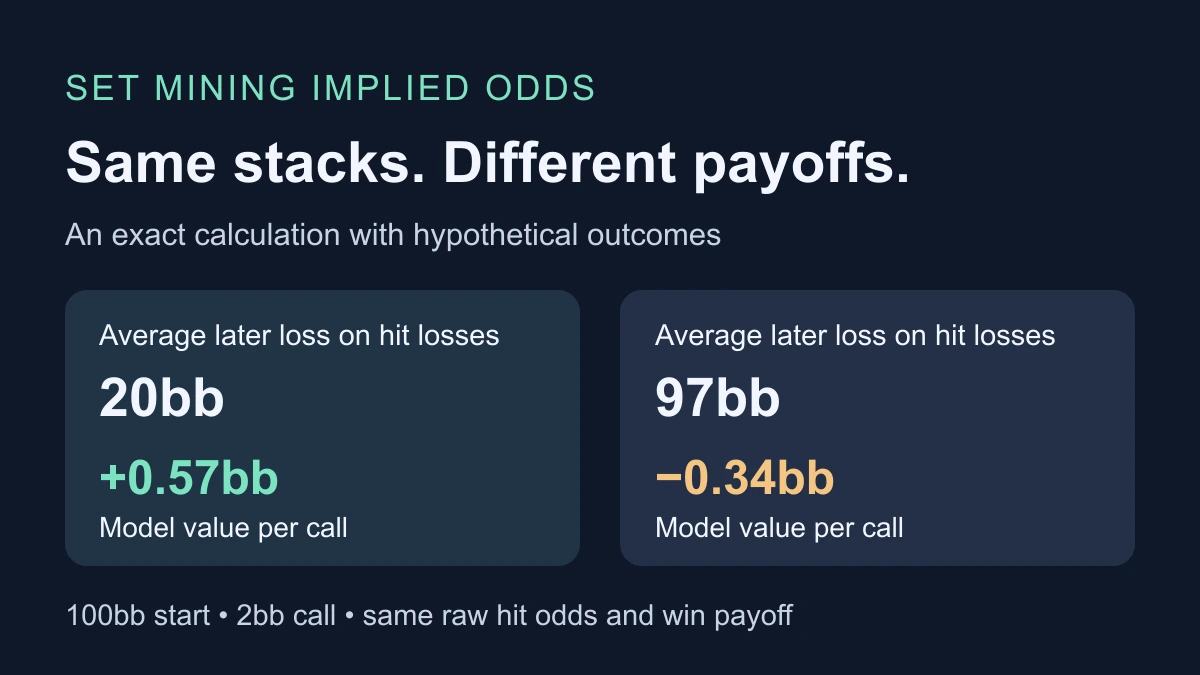
Compare two identical-stack set-mining assumptions, separate winning payoffs from losses after hitting, and reproduce nine exact break-even thresholds.
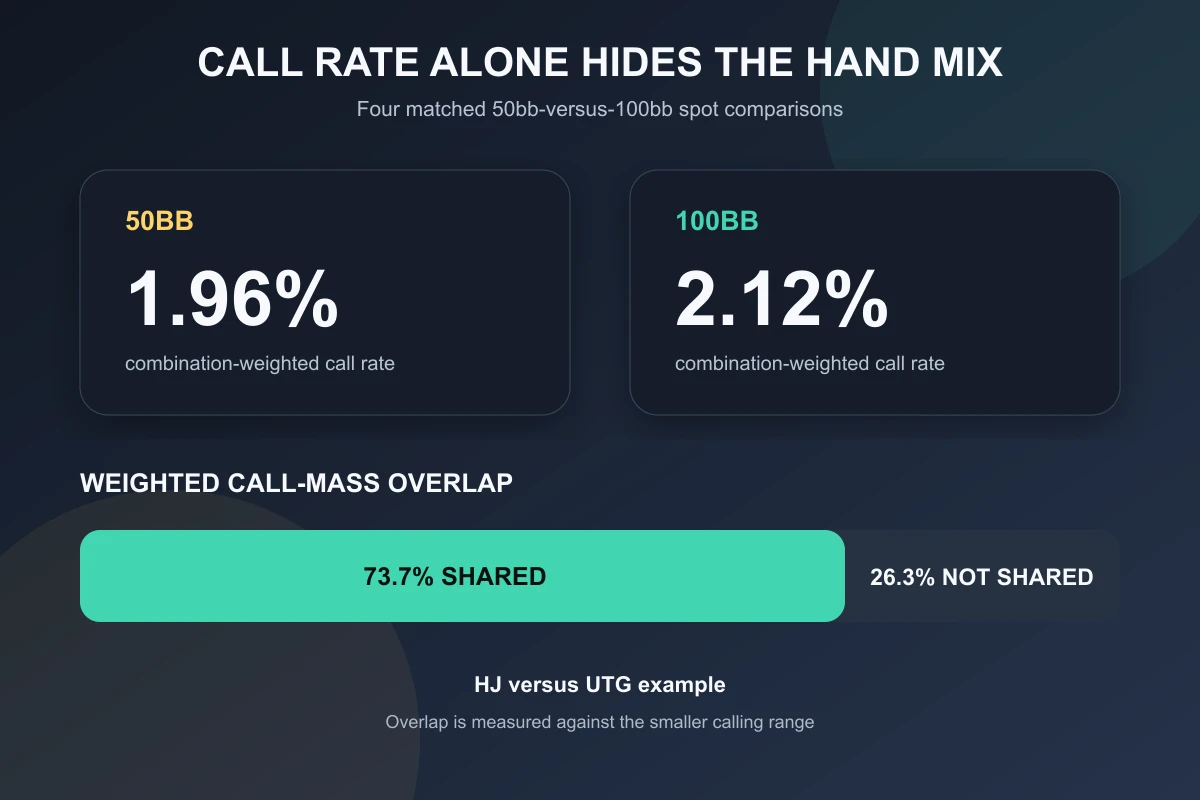
Compare four matched 6-max cash spots: call rates differ by 0.16–0.82 percentage points, while 70.6–75.3% of weighted call mass overlaps.

Learn what a 3-bet is in poker, when to 3-bet for value or as a bluff, and how stack depth, position, and blockers influence optimal re-raise ranges.