
Poker Player Types: How a Solver Plays Fish, Nit and Maniac Profiles
Solver data from 600 flop solutions: against a fish that rarely raises, the button c-bets 92% instead of 77%, mostly small. Nits and maniacs too.
Strategy, study plans, and deep dives into the math.
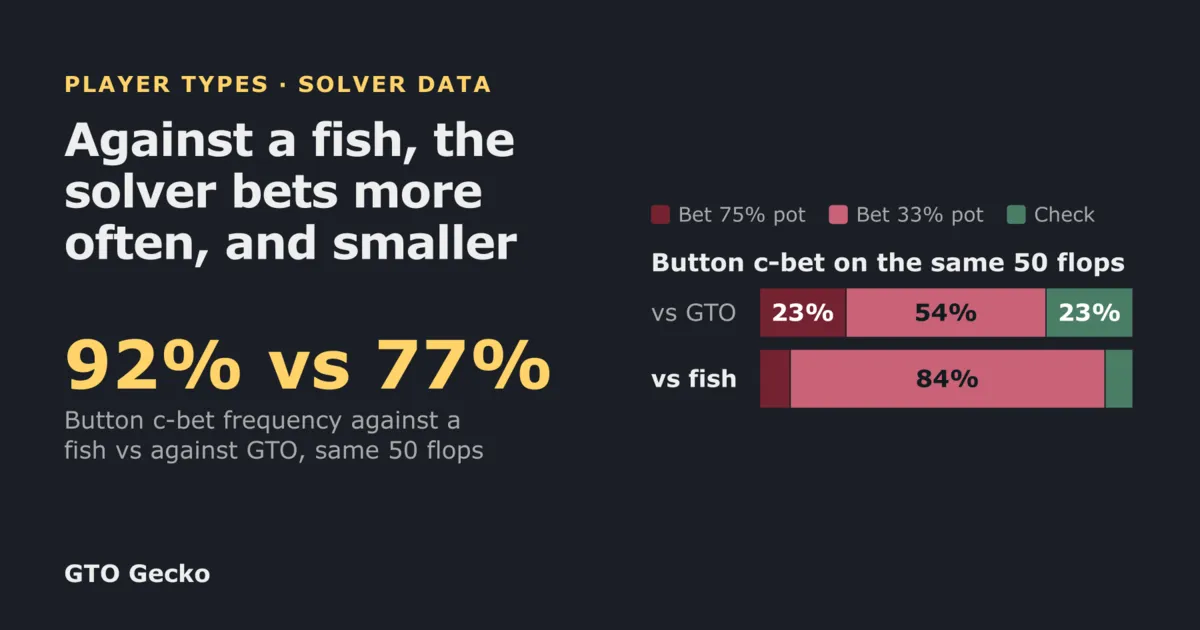
Solver data from 600 flop solutions: against a fish that rarely raises, the button c-bets 92% instead of 77%, mostly small. Nits and maniacs too.
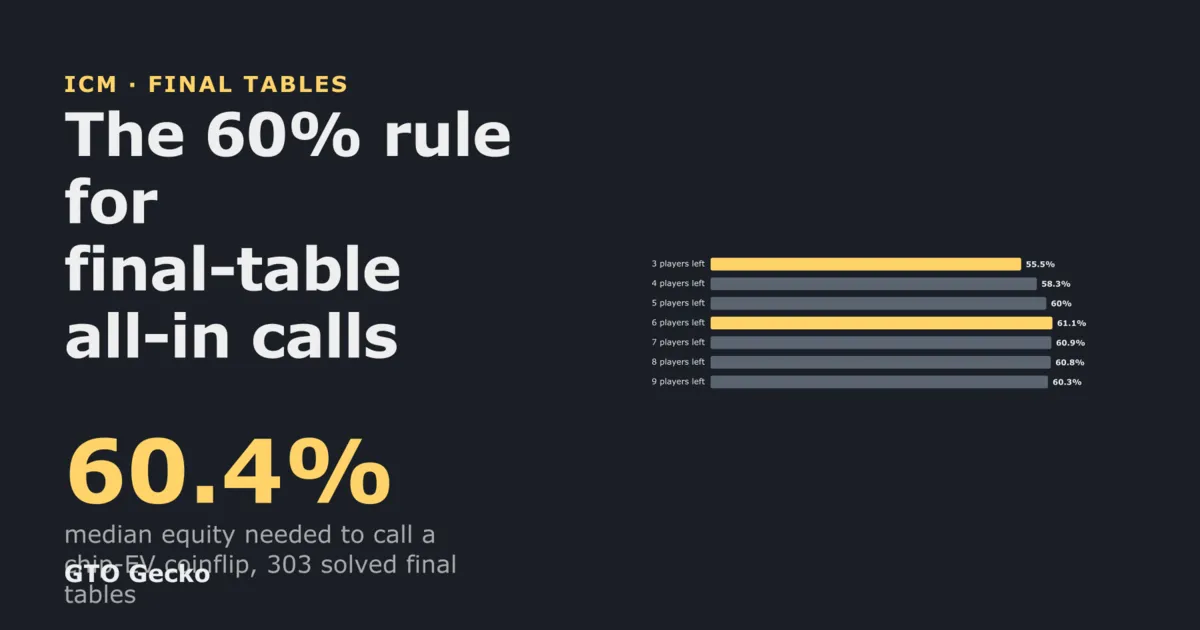
Across 303 solved final tables, a call that is a coinflip in chips needs 60.4% equity. See how it changes with players left and your stack rank.
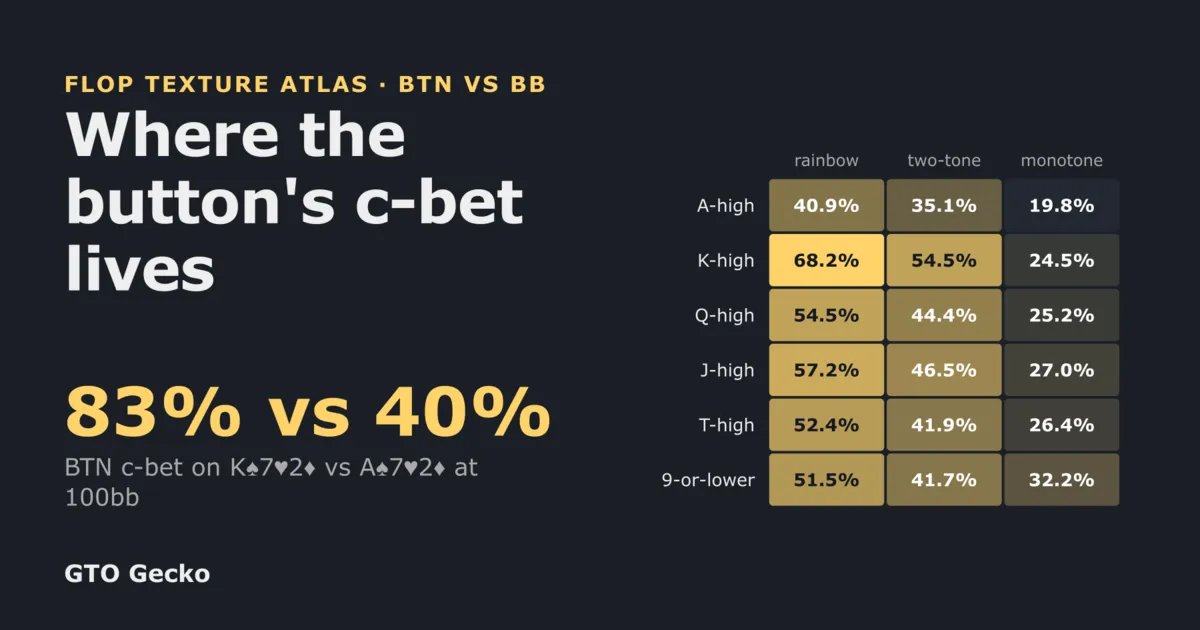
Solver data on 1,755 flops: the button c-bets 46.6% vs a big-blind call at 100bb, from 83% on K-7-2 to 40% on A-7-2. See which textures flip it.

A 10bb heads-up model prefers limping aces to shoving. Compare both response ranges and see why this does not establish a deeper-stack rule.

Use ICM Trainer’s ten-hand Quick Play run to choose focused practice. Learn what the results count and which details to capture before continuing.

A matched solver-output study tests heads-up c-bet habits in three-way pots. See second pair and two pair make opposite adjustments, with ranges and stored EVs.

Who starts a poker countdown, and what happens at zero? Compare TDA and named WPT rules, then prepare your event’s clock policy with an offline worksheet.

Poker Feud stores progress locally. Use four documented choices to distinguish taking a break, going broke, resetting a career and moving to a new phone.

A twelve-scenario river study compares checking and value-bet sizes with weak top pair after a turn check-back. Inspect both ranges, exact EVs and a flush-card exception.

A 36-node tournament study compares donk-bet frequencies with stored EVs. Inspect both ranges, a flush-draw exception and the consistency checks behind the numbers.

A positive bb/100 can accompany a dollar loss at mixed stakes. Reconcile three worked examples using hand counts, blind sizes and one shared clock.

Below the average poker stack can still mean third of nine. Compare two complete fields with the same average, different medians and different ranks.