
bb/100 vs Dollars per Hour: Why the Signs Can Differ
A positive bb/100 can accompany a dollar loss at mixed stakes. Reconcile three worked examples using hand counts, blind sizes and one shared clock.
Essential poker concepts including ranges, position, hand rankings, and basic strategy.
← All Articles
A positive bb/100 can accompany a dollar loss at mixed stakes. Reconcile three worked examples using hand counts, blind sizes and one shared clock.
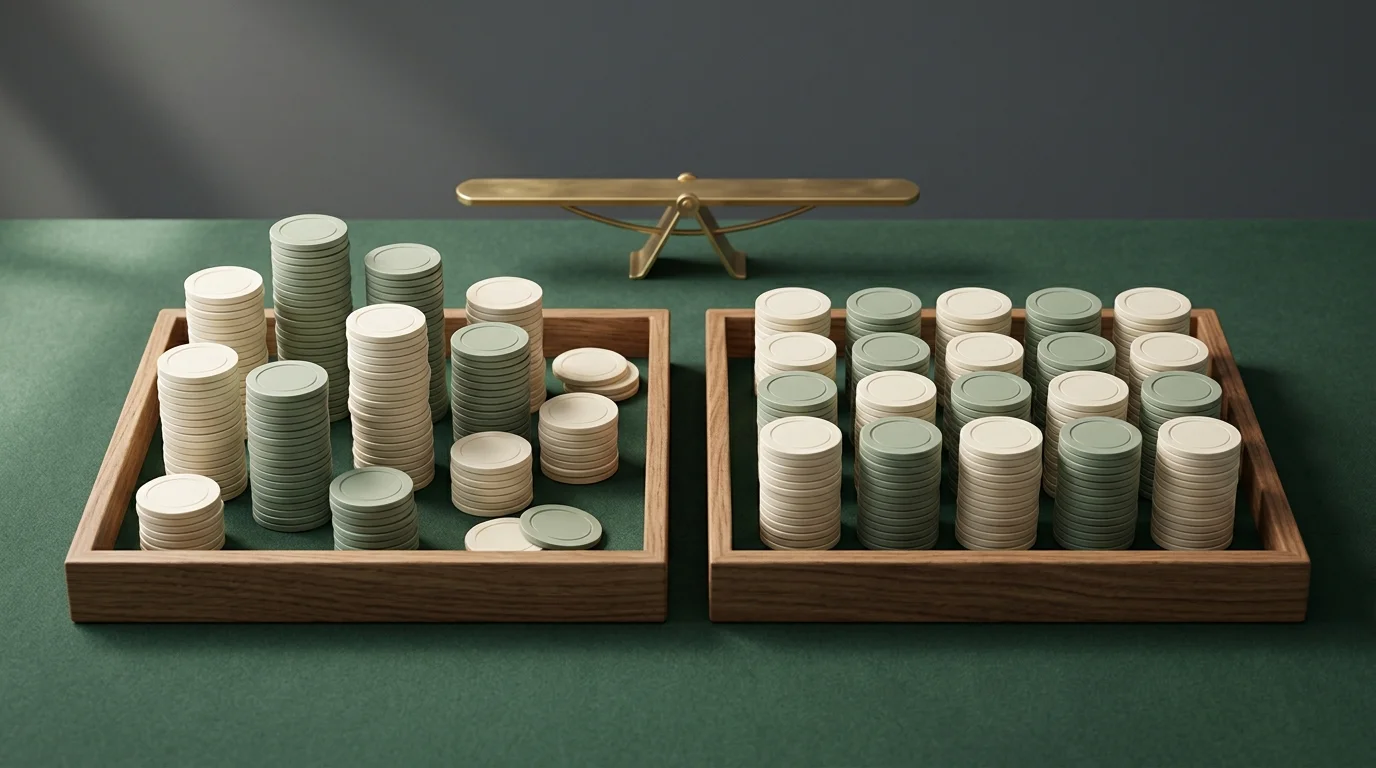
Below the average poker stack can still mean third of nine. Compare two complete fields with the same average, different medians and different ranks.

Pocket aces arrive once per 221 hands on average, but the median wait is 153. Calculate the 500-hand no-AA chance, the 90% mark, and repeat waits exactly.
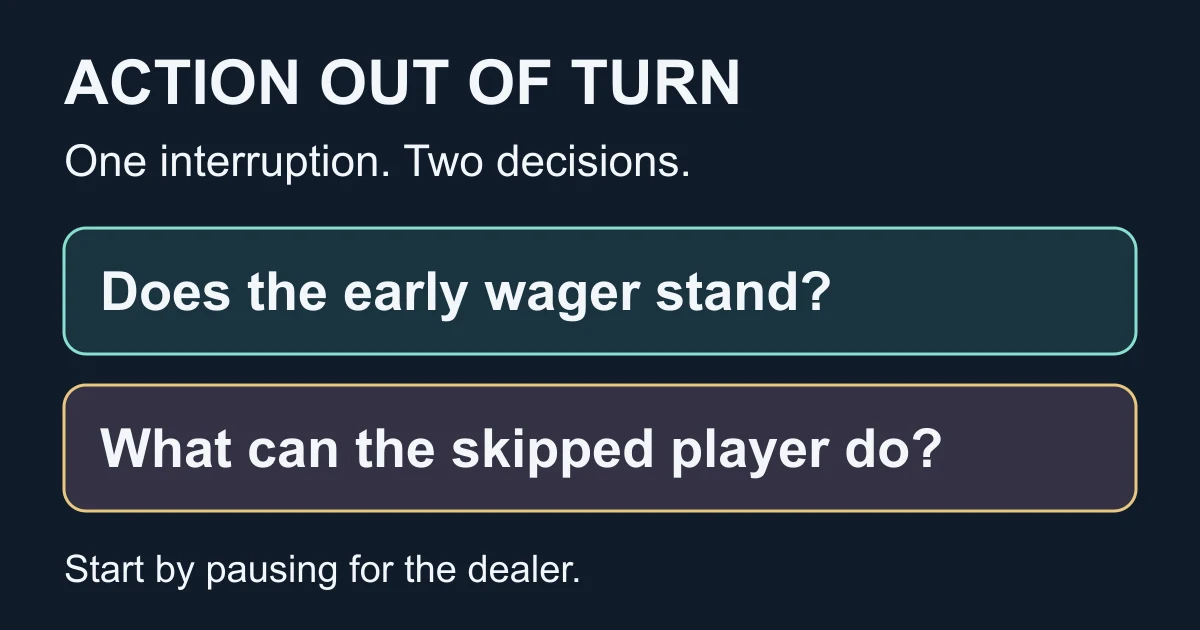
An early bet can still bind. Compare six out-of-turn poker cases, separate the wager from the skipped hand, and use a printable correction record.
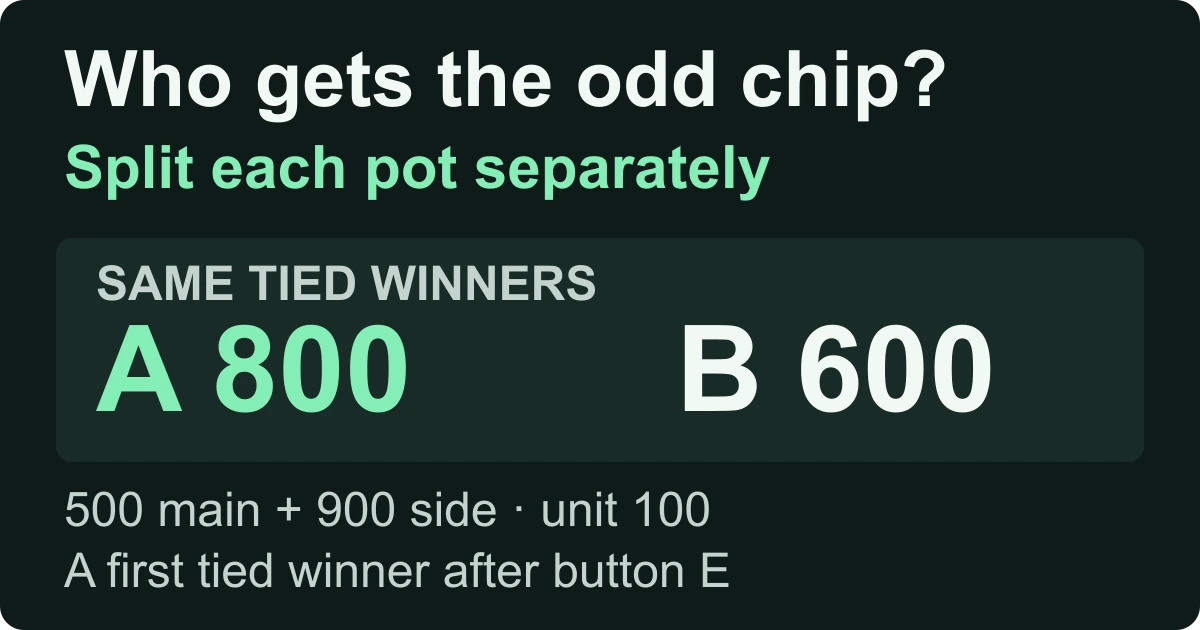
Tied hands can receive unequal chip totals. Follow a 500 main pot and 900 side pot, check the smallest denomination, and use a printable settlement sheet.
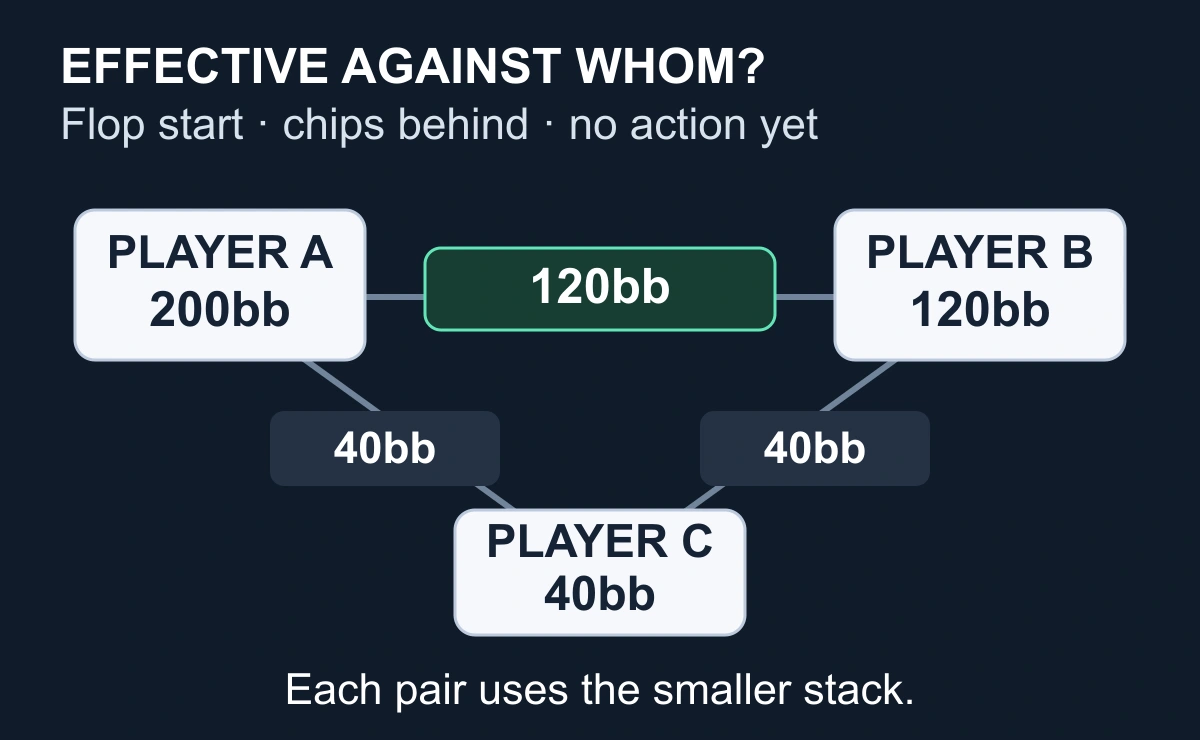
Map effective stacks against each opponent. A 200/120/40bb example and a browser calculator show why the shortest stack does not cap the whole multiway hand.
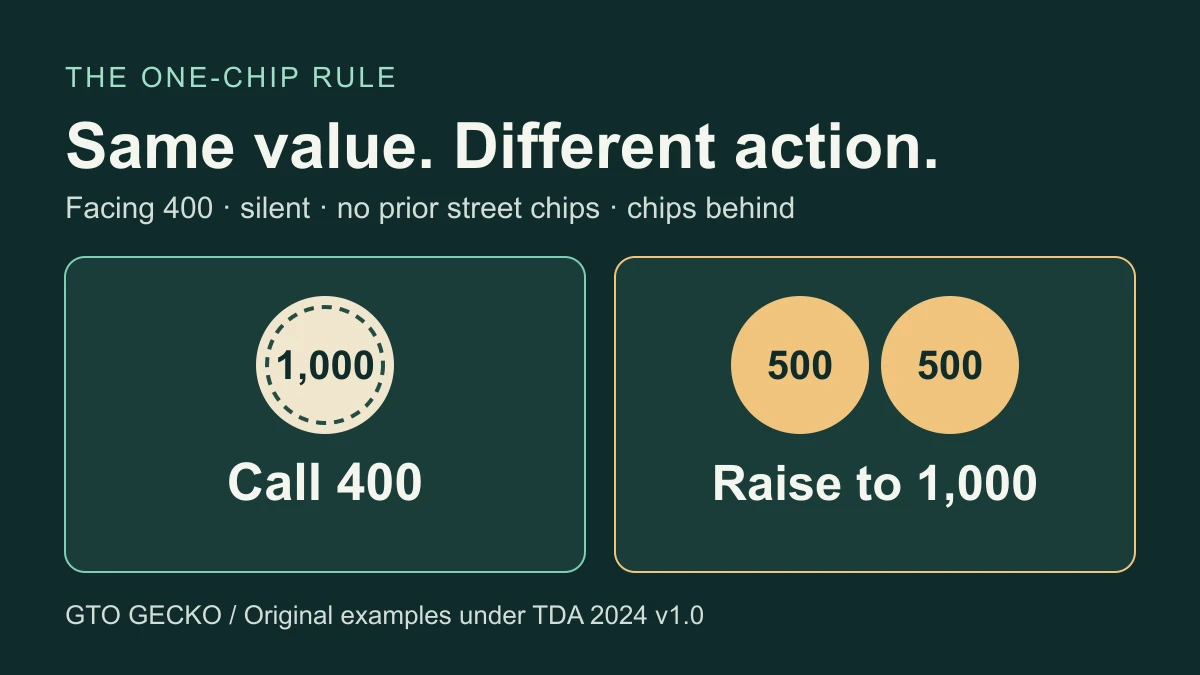
One 1,000 chip can call while two 500 chips raise. Learn the oversized-chip rule through ten paired examples, last-chip exceptions and a printable reference.
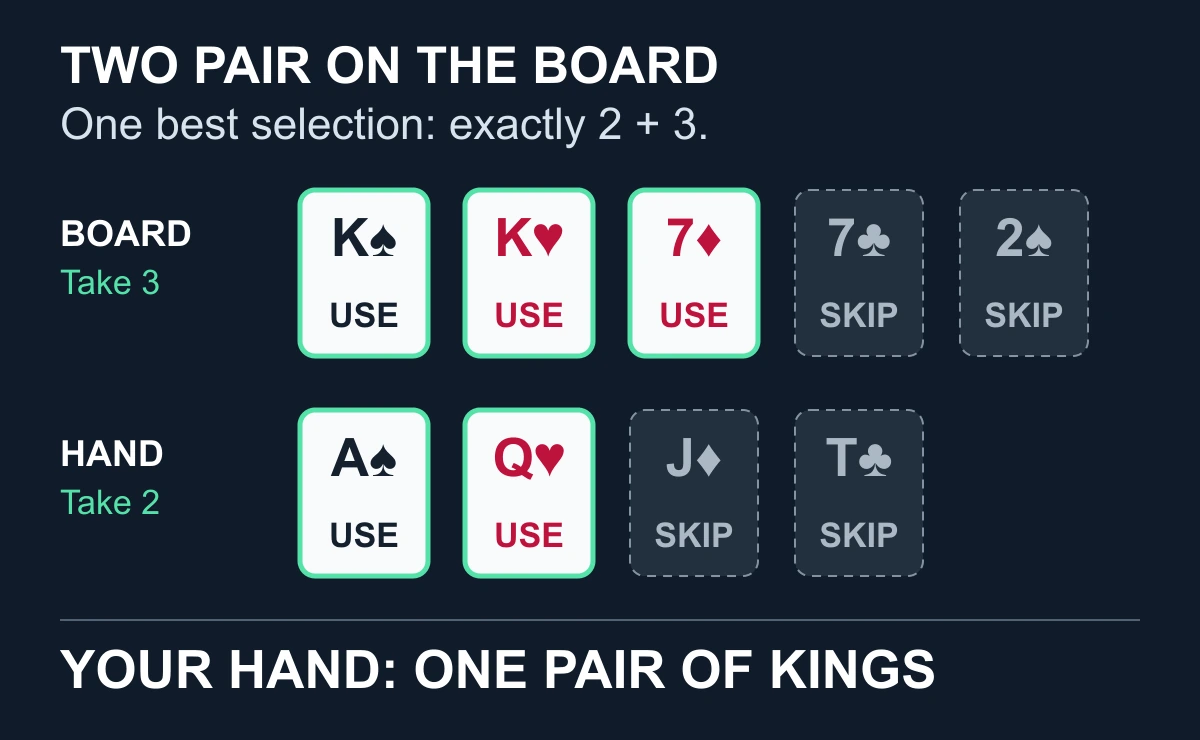
Read paired PLO boards correctly: eight checked examples show why two pair, a full house or quads on the board may not be your hand. See exactly which cards count.
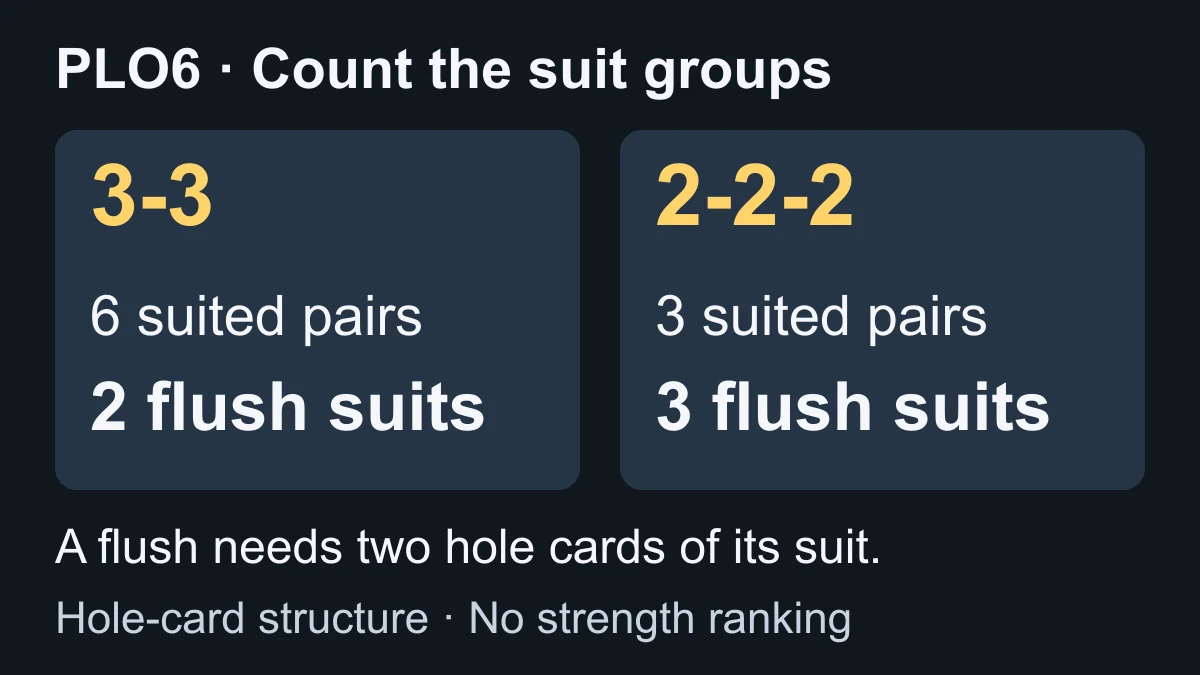
Six same-suit pairs can belong to only two suits. Decode PLO5/PLO6 hands with all nine six-card suit patterns, exact deal counts and reproducible examples.
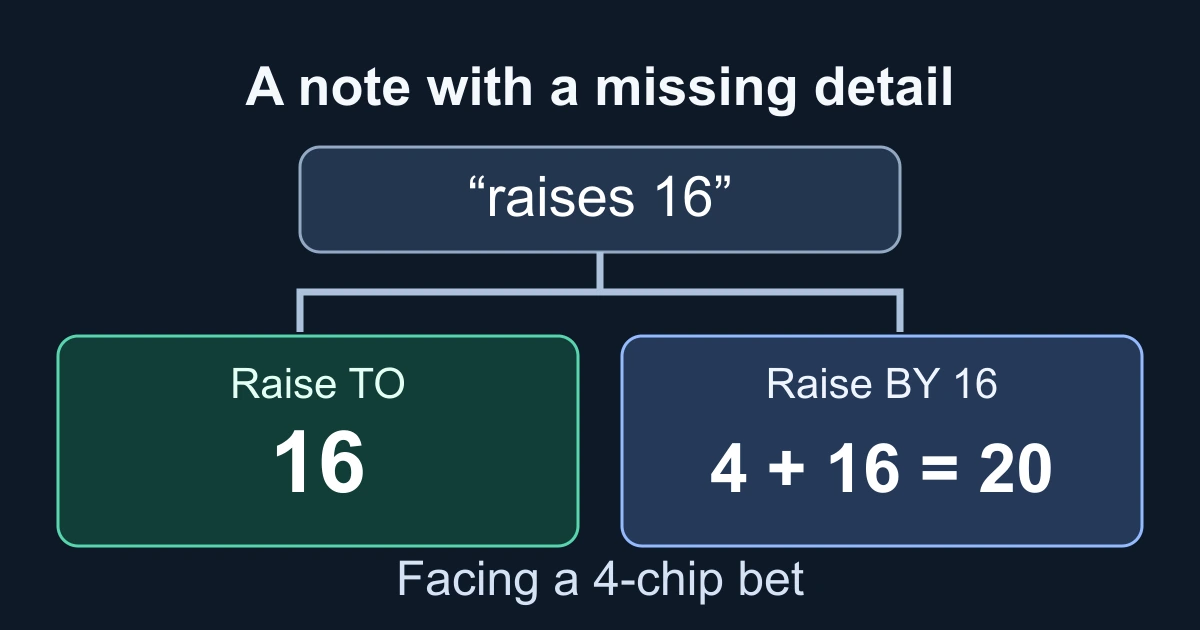
Build useful poker hand notes without inventing missing details. Use a reusable template, two checked ambiguity examples and a clear verify-or-branch workflow.
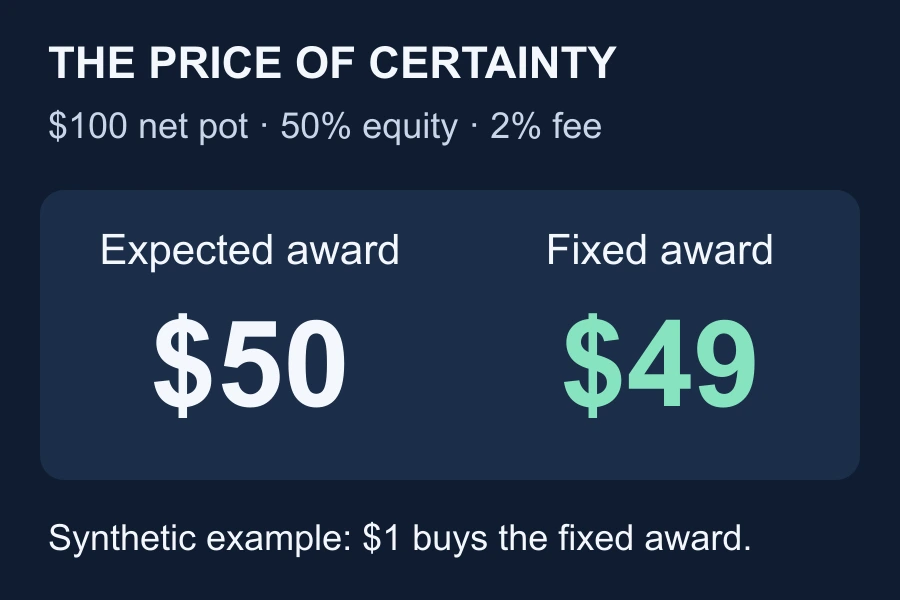
Audit an all-in cash-out quote using the net pot, equity and fee. Worked examples show why a displayed 60% can make a 2% fee look different.
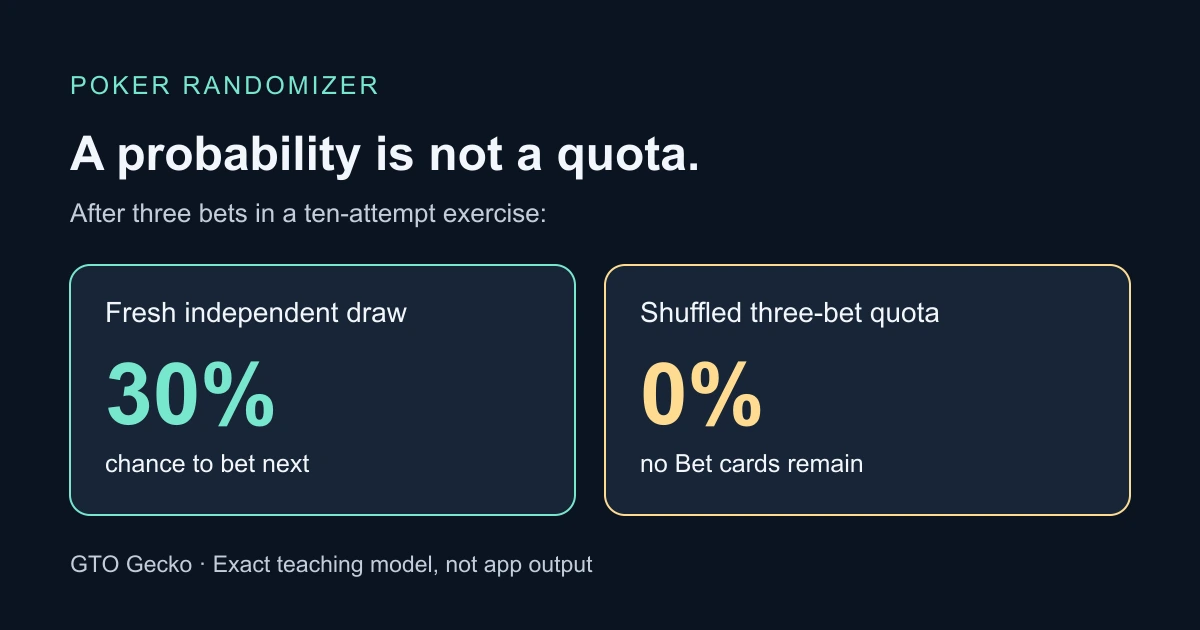
Turn mixed poker frequencies into clear 1–100 intervals. An exact 30% example shows why fresh random draws differ from forcing three bets into every ten tries.
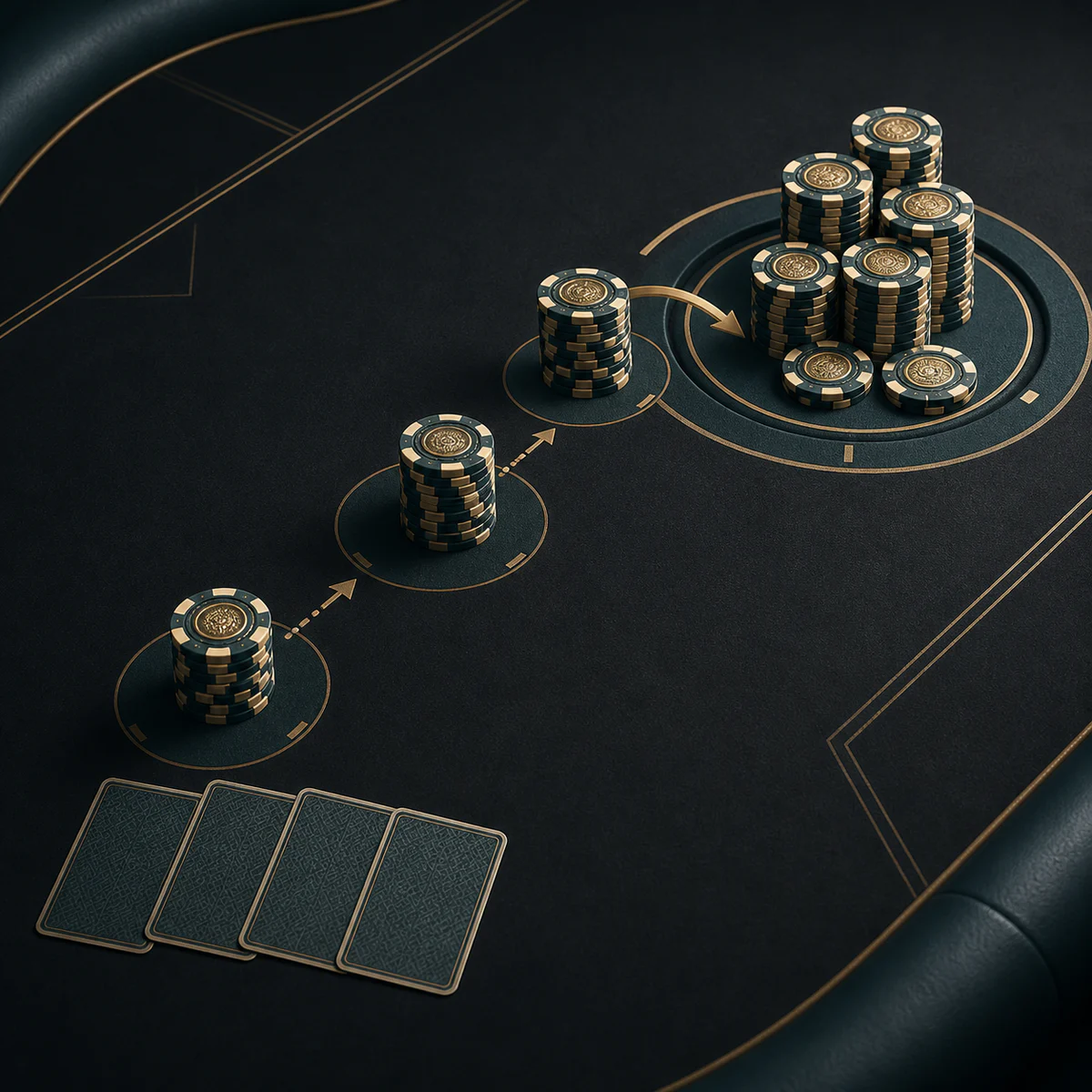
Calculate any PLO pot-sized raise by separating the call, sizing pot after call, chips added, and final raise-to, with preflop and repot examples.
Calculate when a poker rake cap is displayed, reached, and binding, convert the cap to big blinds, and see effective rake fall as the pot grows.
Learn how live straddle rules change preflop action, minimum raises, effective stack depth, and flop SPR with a reproducible 5/10 example.
Learn what pot committed means, why earlier chips are sunk, and how the current pot, call price, ranges, and future action decide call or fold.
See 12 exact Short Deck preflop matchups and isolate what changes when low cards leave, A-6-7-8-9 becomes a straight, and flush beats full house.

Check a PHH v0.0.2 hand locally, remove names and optional context, preserve action tokens, and understand why the result is not anonymous.
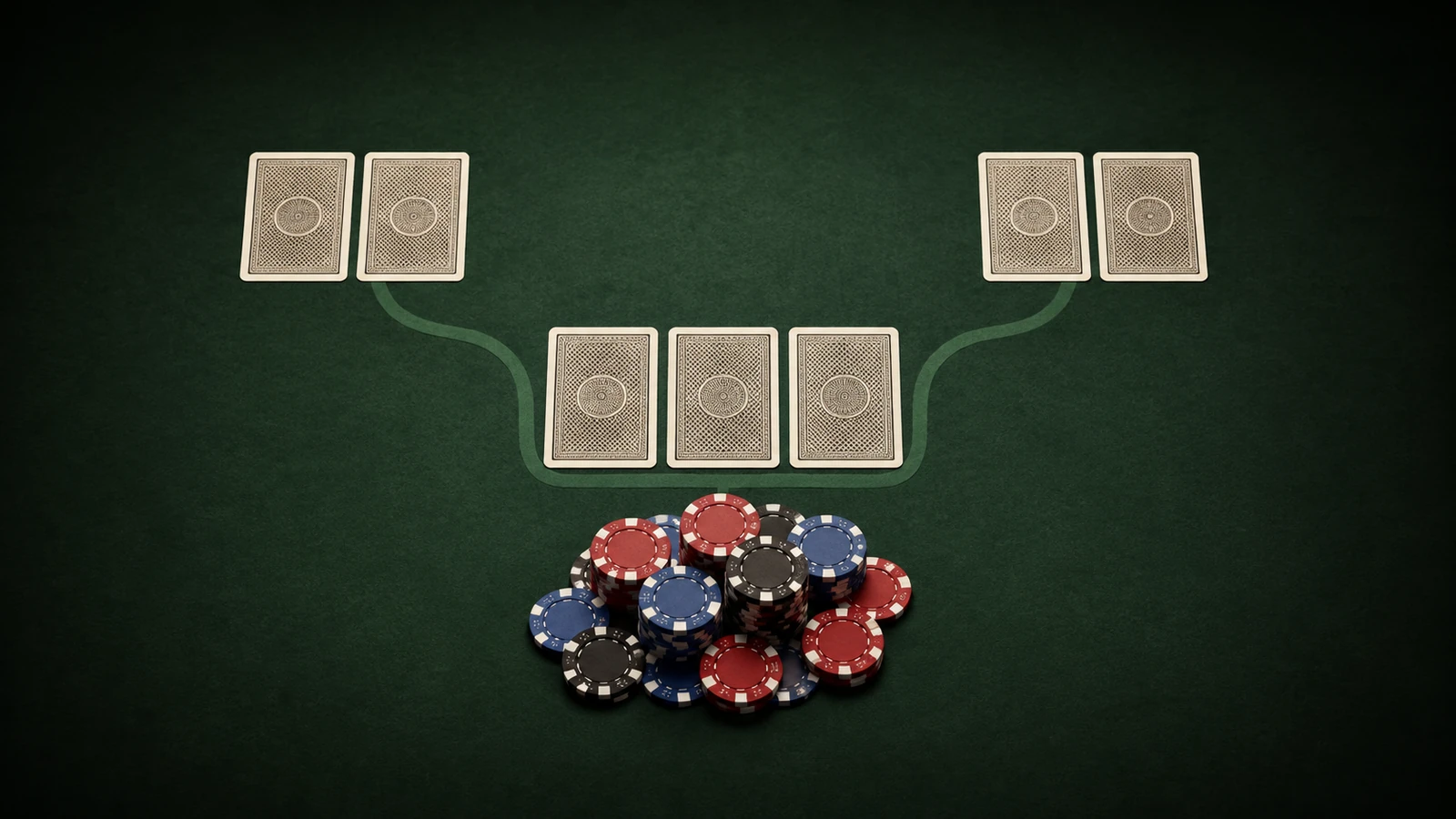
Running it twice preserves post-all-in EV under fair equal-board dealing, but can change payouts. See 1,789,832 exact labeled final-board pairs.
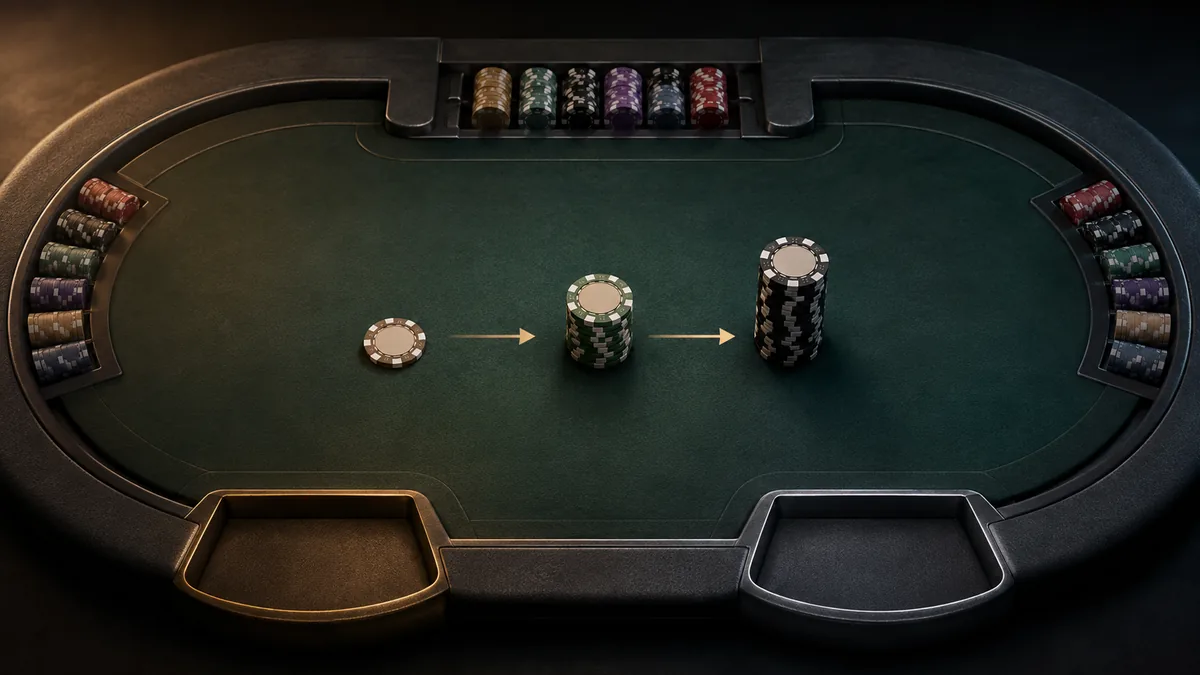
Check whether a short all-in reopens betting under Poker TDA 2026 by tracking the current wager, each player’s last action, and the full raise.
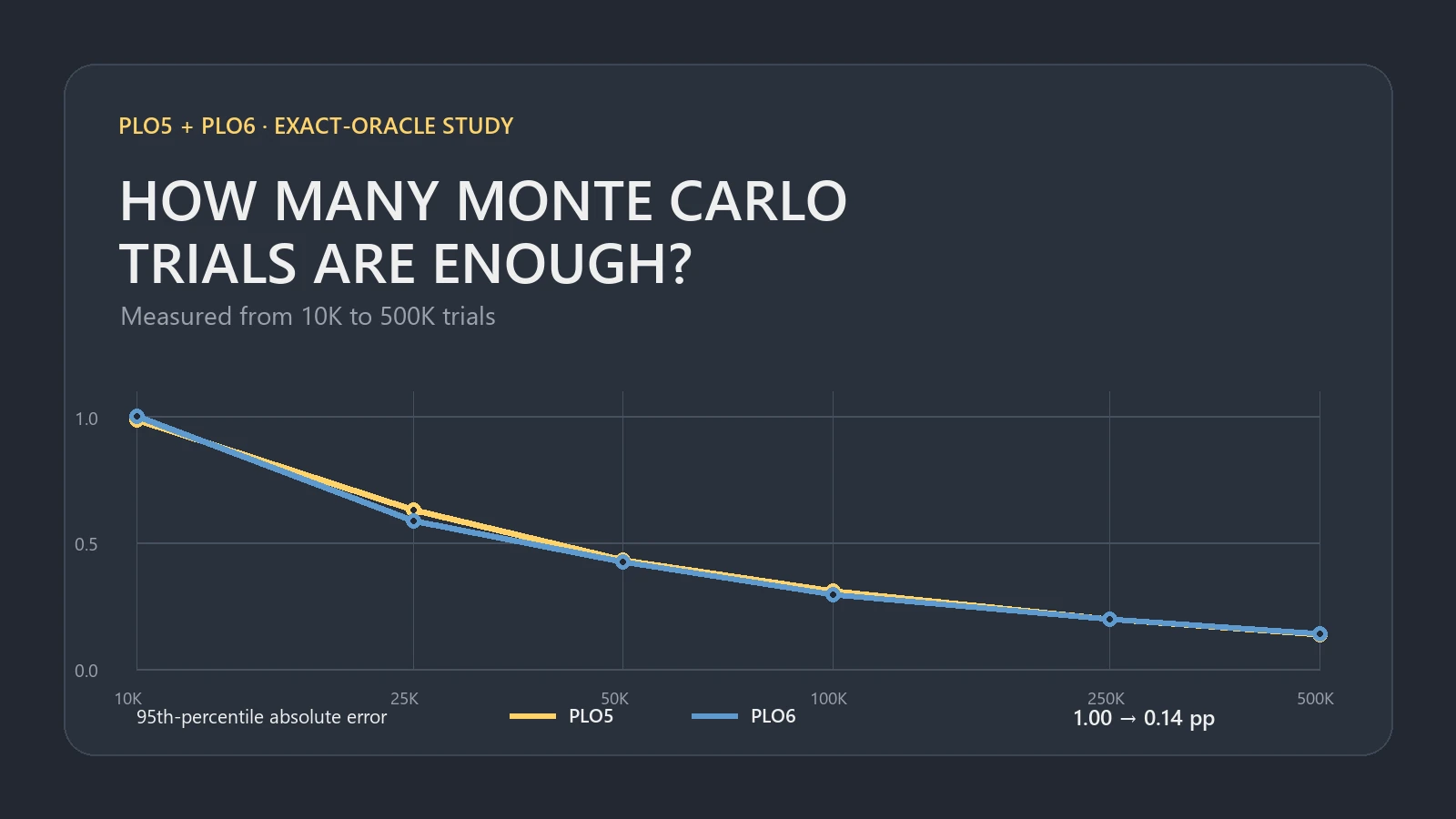
We tested 10,000 to 500,000 Monte Carlo trials against exact PLO5 and PLO6 equities across six fixed-hand matchups. See the measured error.
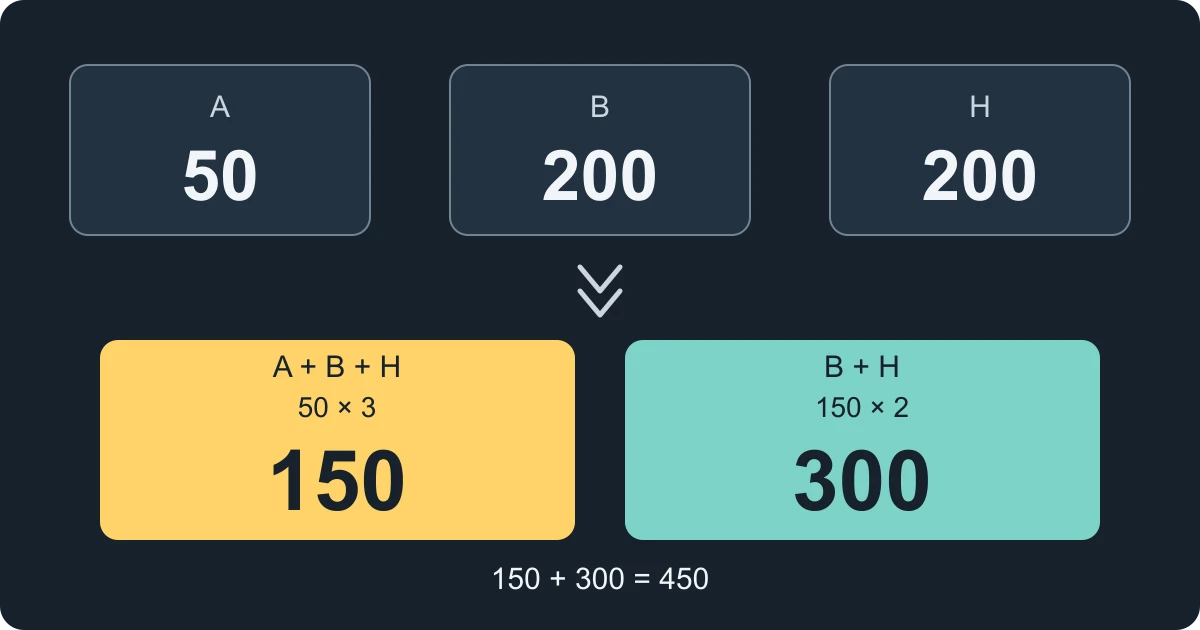
Separate contributions, eligible players and equity for each side pot. A 50/200/200-chip example and all 42 rivers show refunds, folded chips, ties and call EV.
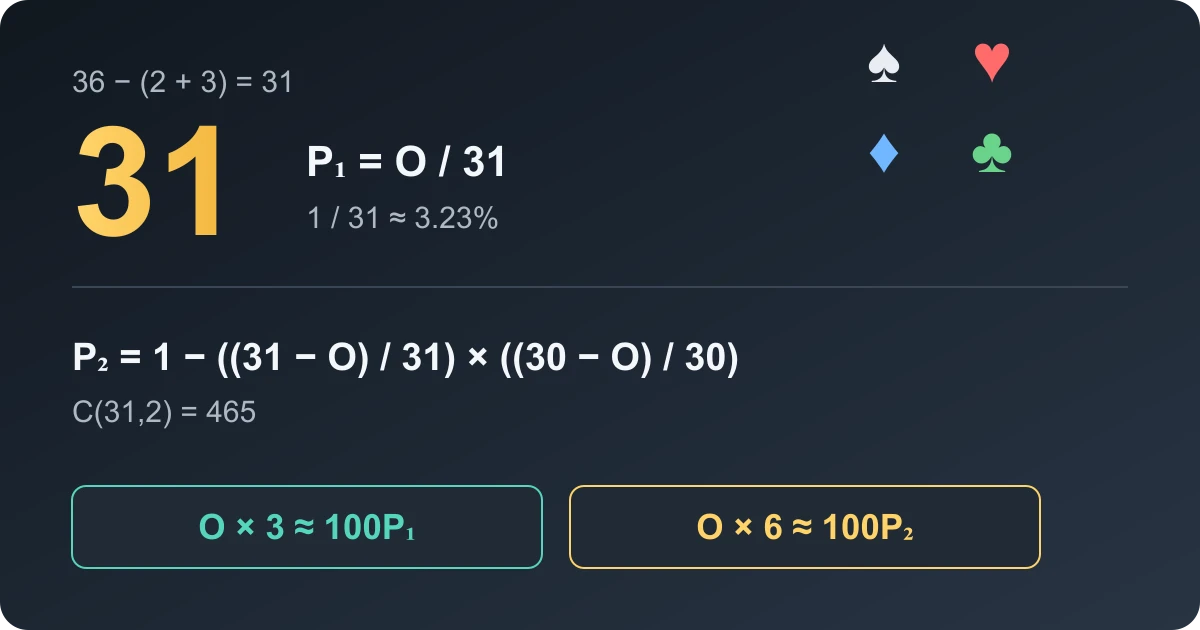
We enumerated all 465 turn-river runouts for 1–20 clean outs. See when Short Deck’s ×3/×6 shortcut works, where it fails, and the exact formulas.
We measured 673,118 solver-graded decisions from real players: 27% fewer mistakes by session 25, EV loss down 28% in 1,000 hands, and the research on why drilling works.
How accurate are GTO app solutions? Inside GTO Gecko's MTT library: antes, rake, ICM assumptions, and the verification every range passes before it ships.
How to learn PLO in five stages: the two-card rule, starting hands, preflop ranges, nut awareness, and PLO5, with realistic timelines and free study tools.
How to practice poker off the table: four drill types, a weekly structure, hand review that finds real leaks, progress metrics, and a 30-day plan.
PLO starting hands explained: connectedness, suit classes, nut potential, danglers, the archetypes worth raising, and the traps that drain your stack.
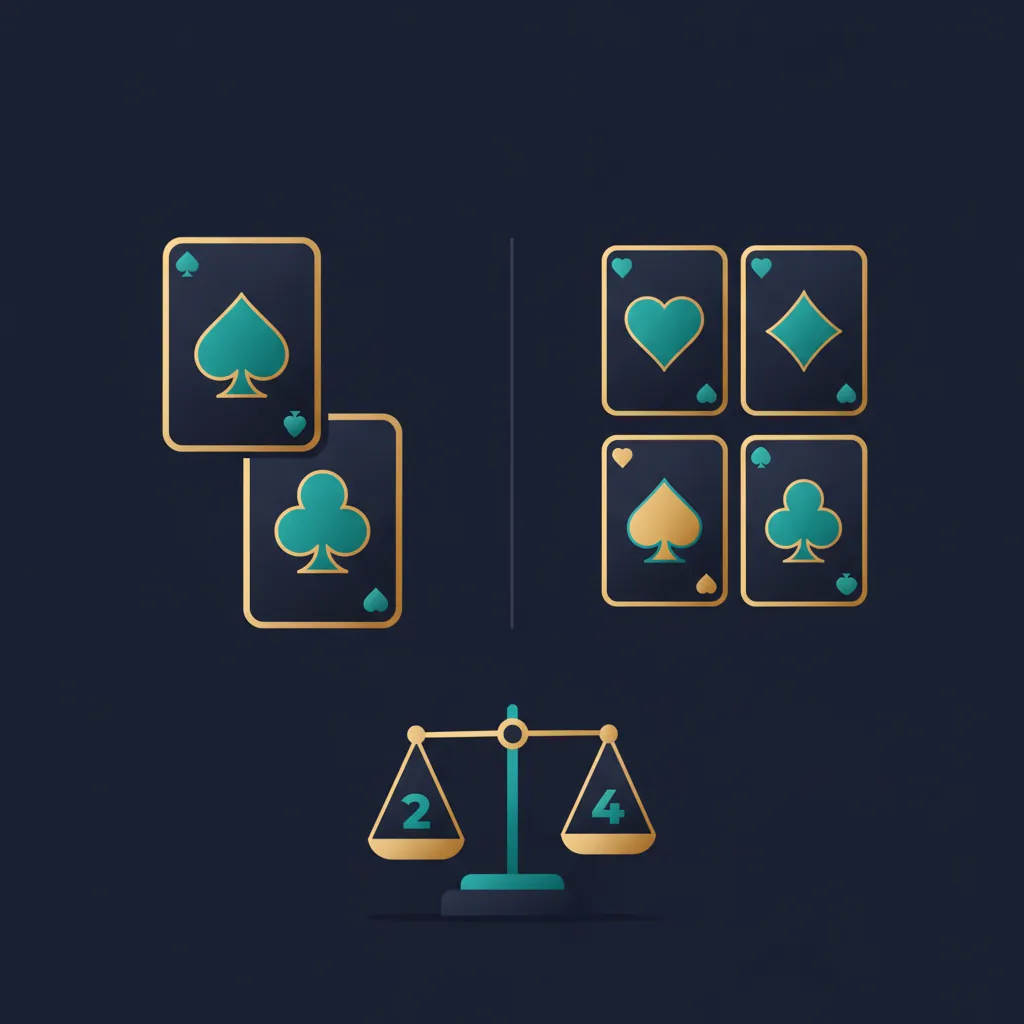
PLO vs NLHE compared: hole cards, hand values, equity gaps, variance, and bankroll needs, plus how to study each game and when it pays to play both.

Poker solvers are generally study tools, but real-time assistance is prohibited by major poker rooms. See current rules and a safe off-table workflow.

A poker solver computes strategies; a GTO trainer tests your decisions. Compare inputs, outputs, use cases, and the study loop that connects both.
Learn how a preflop trainer turns GTO ranges into fast decisions, which settings matter, what to track, and how to build a focused 15-minute routine.

Master every poker preflop chart with GTO opening ranges for each position. Learn what hands to play, how to read range matrices, and avoid costly mistakes.
Learn how to read a poker range chart, count combos, and build solver-approved poker ranges by position. Plus range vs range advantage explained.

GTO poker explained in plain English: Nash equilibrium with real numbers, solver basics, hand examples, and a 4-step study plan for an unexploitable game.

Learn what poker equity means, how to calculate it, and why raw equity, equity realization, and fold equity shape every profitable decision you make.
Learn pot odds and essential poker math: calculate the price of a call, compare it with your equity, and avoid common pot-accounting mistakes.