
Flop Texture Atlas: Where the Button's C-Bet Lives
Solver data on 1,755 flops: the button c-bets 46.6% vs a big-blind call at 100bb, from 83% on K-7-2 to 40% on A-7-2. See which textures flip it.
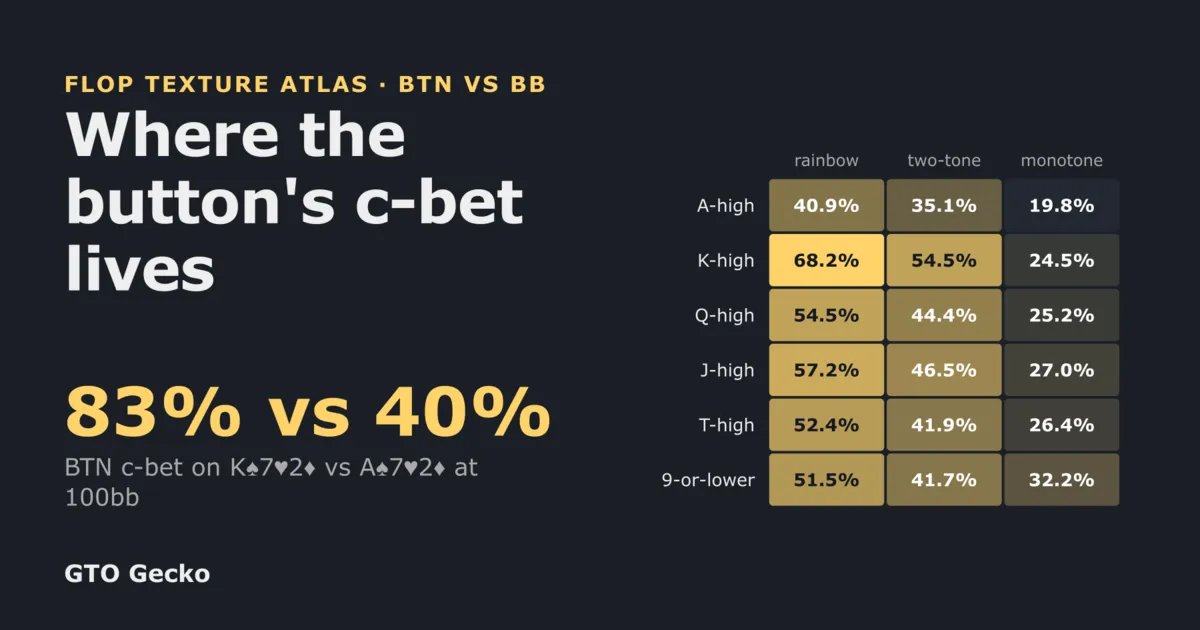
Solver data on 1,755 flops: the button c-bets 46.6% vs a big-blind call at 100bb, from 83% on K-7-2 to 40% on A-7-2. See which textures flip it.
A matched solver-output study tests heads-up c-bet habits in three-way pots. See second pair and two pair make opposite adjustments, with ranges and stored EVs.
A twelve-scenario river study compares checking and value-bet sizes with weak top pair after a turn check-back. Inspect both ranges, exact EVs and a flush-card exception.
A 36-node tournament study compares donk-bet frequencies with stored EVs. Inspect both ranges, a flush-draw exception and the consistency checks behind the numbers.
An eight-scenario river study tests automatic give-ups with missed flush draws. Compare exact hand EVs, both reached ranges and input-rounding sensitivity.
A 24-flop solver-library study compares the cost of checking sets. Inspect both ranges, blocked top-pair calls and the connected-board exceptions.

An eight-board solver study tests automatic small turn probes after a flop check-back. Compare both ranges, exact hand EVs and exceptions.

A 20-flop solver study compares overpair checks and two c-bet sizes. Inspect both ranges, exact EVs and boards where checking becomes costly.
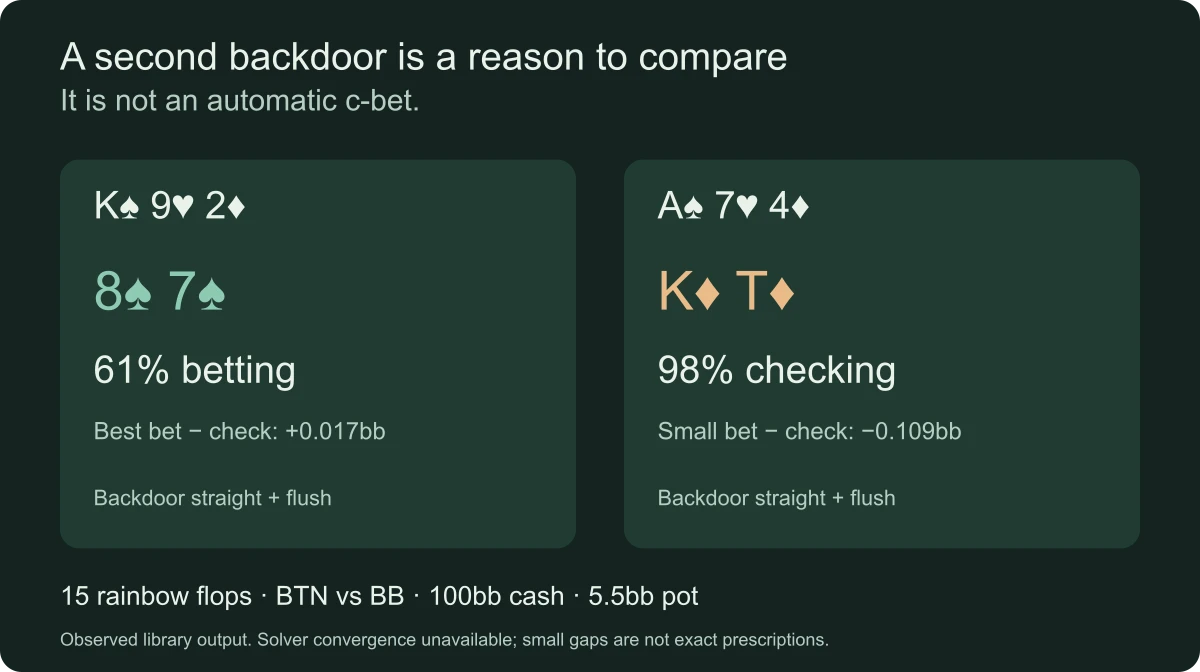
A 15-flop study compares backdoor c-bet frequencies and action EVs. See the same-rank suit test, both ranges and a hand that checks 98%.
An 18-flop solver study tests automatic folds against check-raises. Compare ace-high kickers, exact suits, both ranges and the EV of calling.
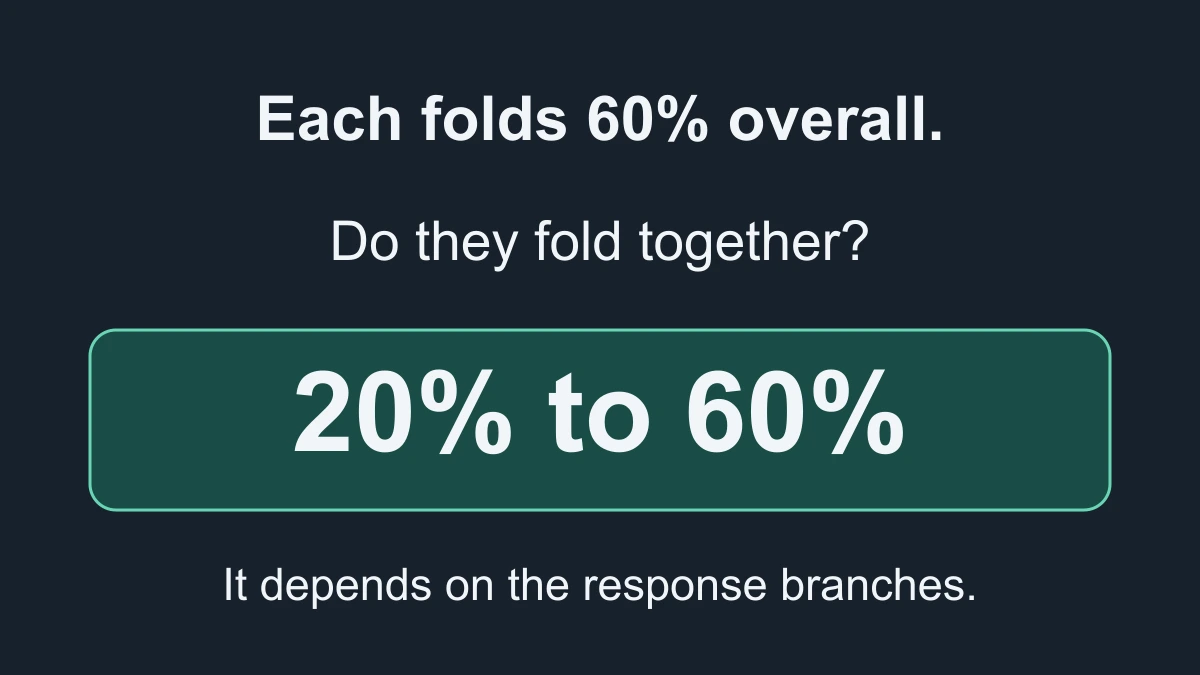
Two opponents who each fold 60% do not necessarily fold together 36%. A conditional response tree and exact examples show which denominator matters.
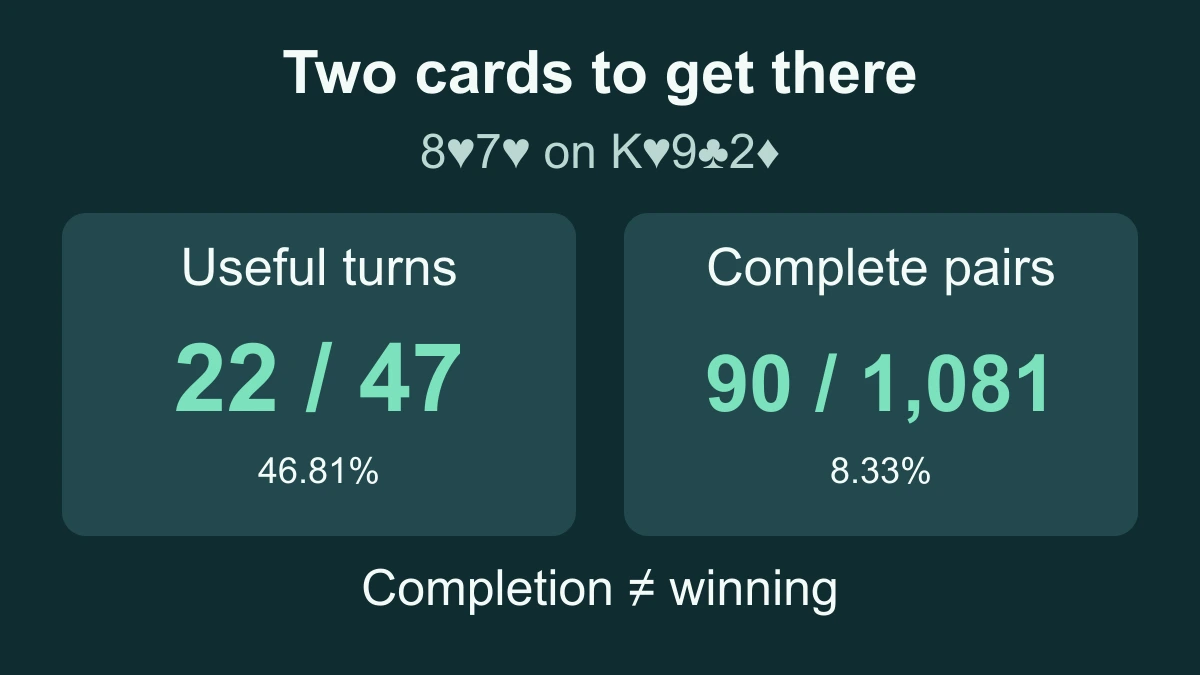
Map every turn for 8♥7♥ on K♥9♣2♦. Exact counts show how runner-runner straight and flush routes overlap, and why completion is not winning equity.
A dry side pot does not make every bet pointless. Use a disclosed river payoff model to separate dead bluffs, main-pot isolation, and value bets.
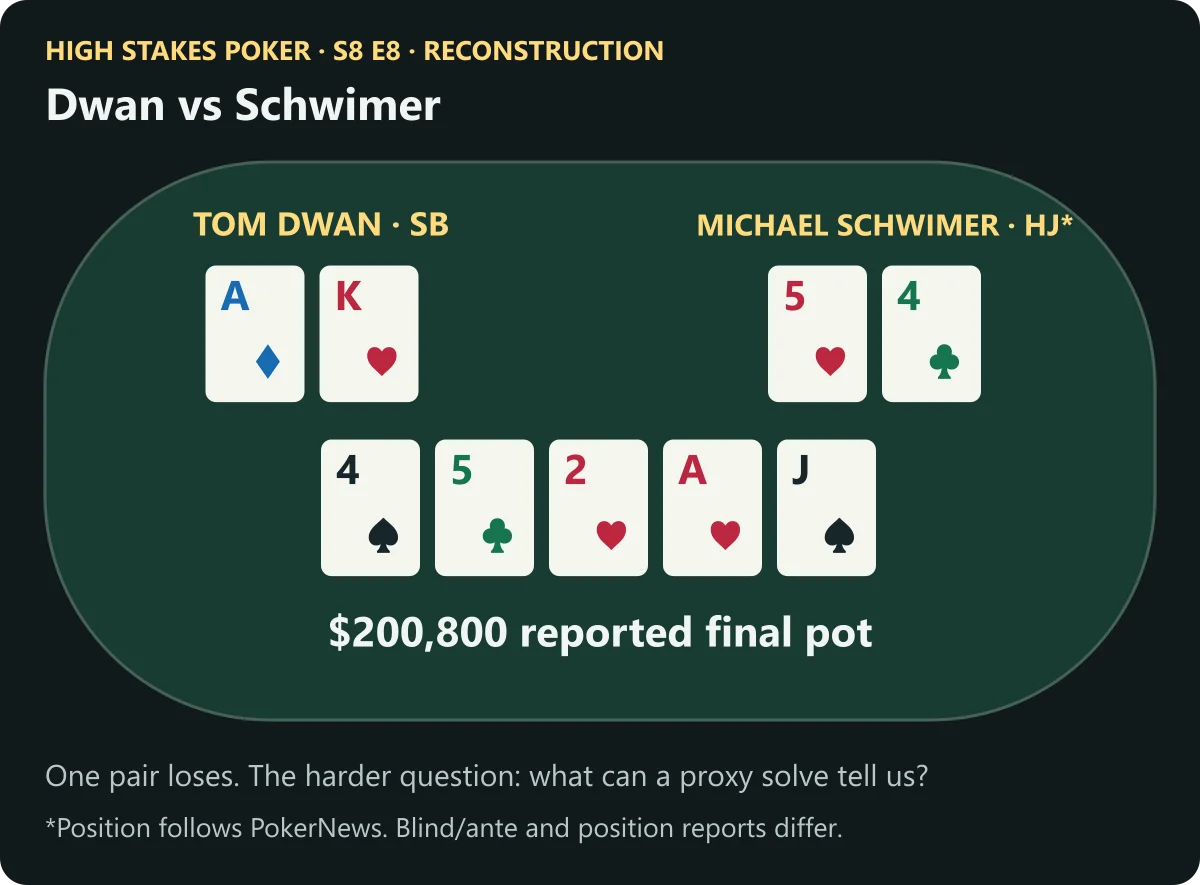
Replay Dwan’s ace-king against Schwimer’s 54o with visual hand history, real database comparisons, a range grid, and clearly labeled solver approximations.
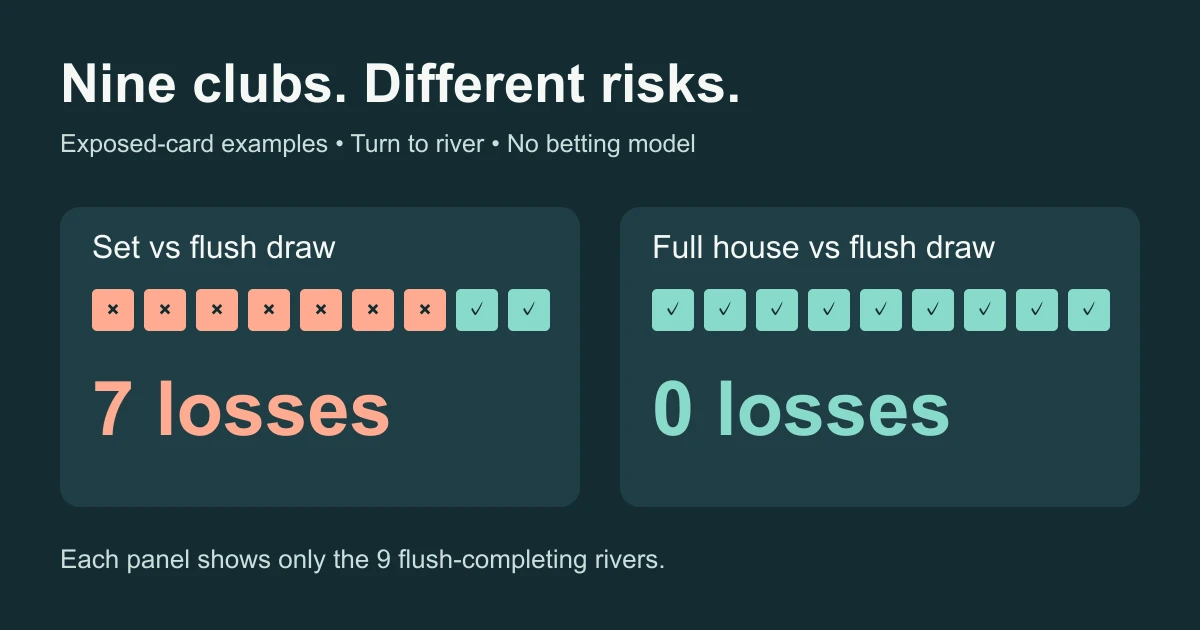
When should you check a strong hand? Four exact Hold’em examples separate getting outdrawn, letting a worse hand improve, and missing a chance to build the pot.
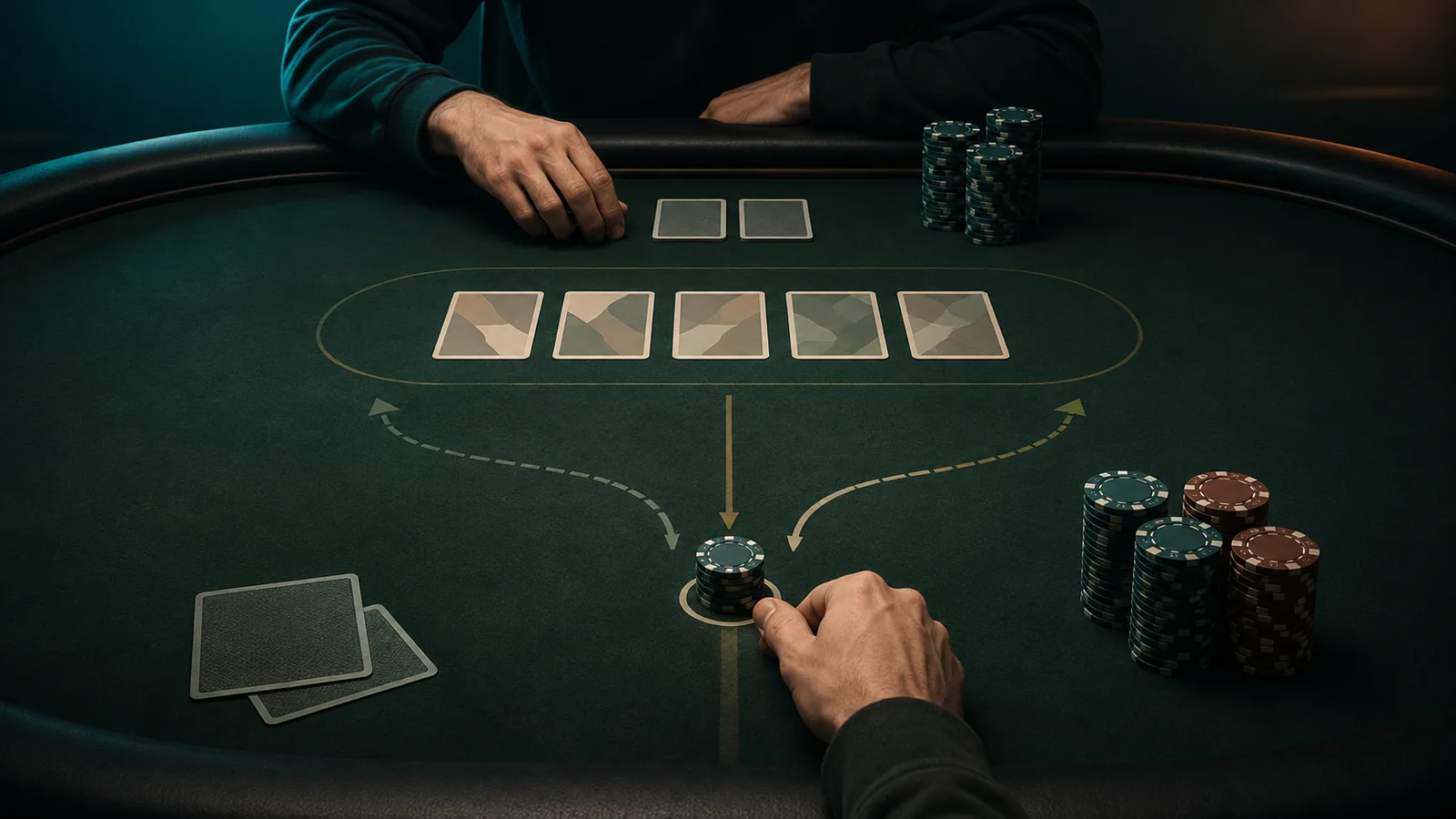
Learn when a small out-of-position river lead beats checking. Compare every fold, call, and raise branch with a reproducible 100-chip EV model.
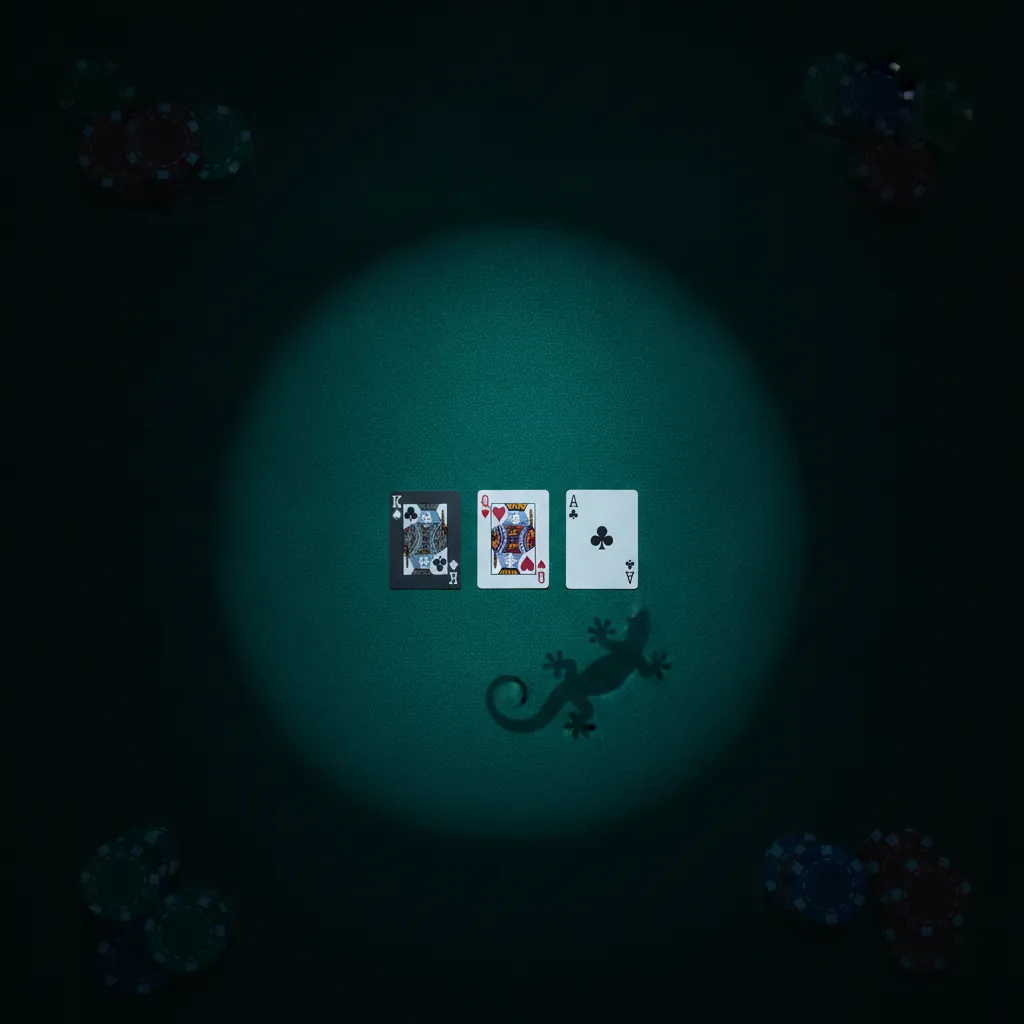
Board texture, measured: all 22,100 flops classified on four axes, plus how often the raiser and the caller really connect on dry, wet and paired boards.
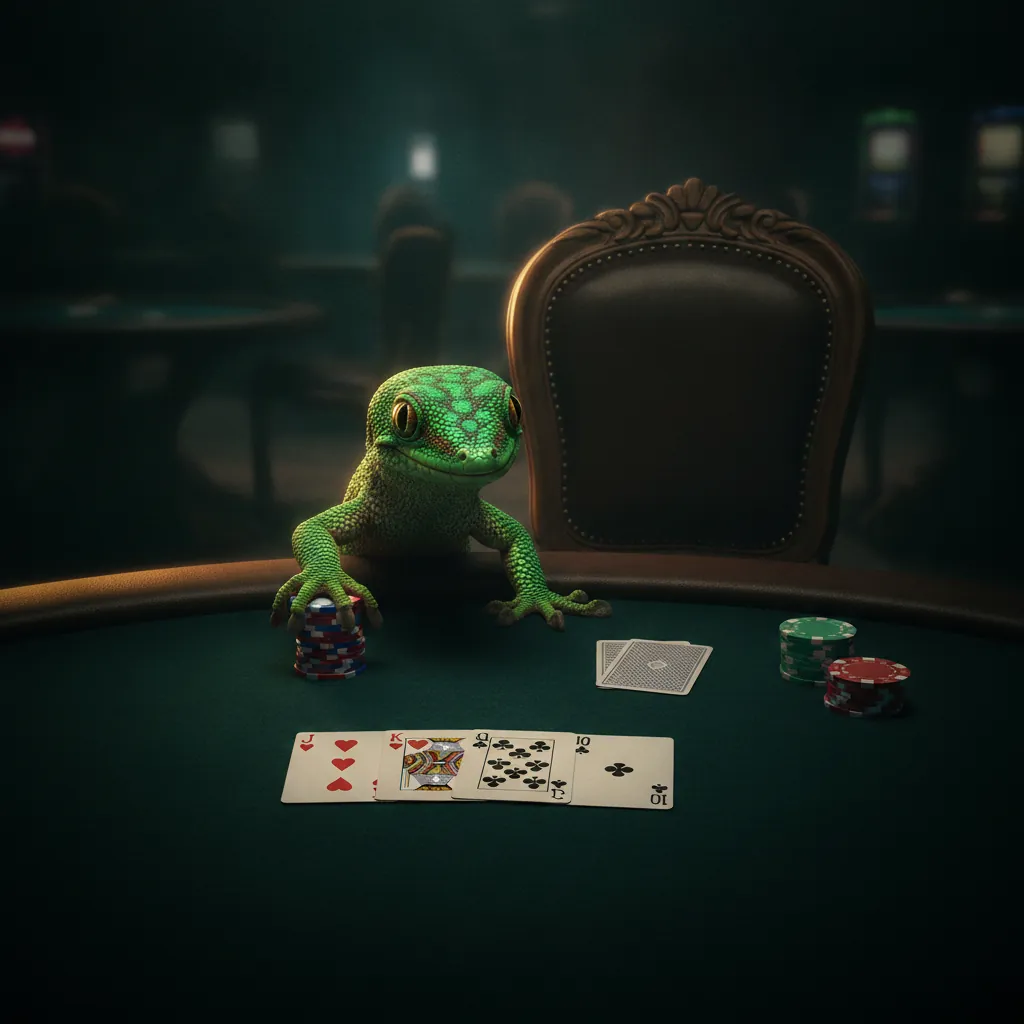
A probe bet is a turn or river lead after the preflop raiser checks back. See which turn cards to attack, how much to bet, and when probing loses money.
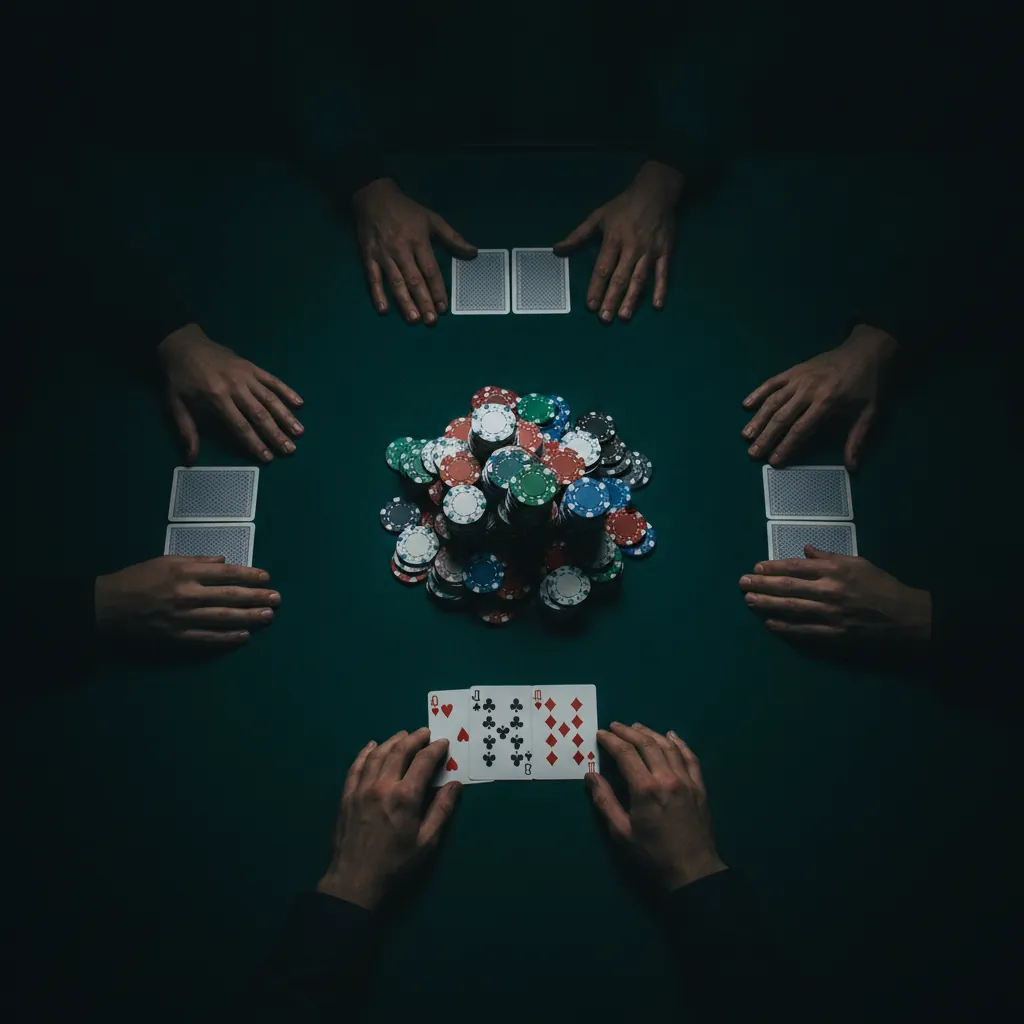
Study multiway equity, conditional fold probabilities and bet sizing using a dated range sample and simulation, with clear limits on heads-up shortcuts.
Learn when and how to check-raise in poker: value and bluff check-raises, sizing, board textures, turn check-raises, and how to defend against them.

Learn what a continuation bet is, when to c-bet for value or as a bluff, optimal c-bet sizing, and how board texture shapes profitable c-betting ranges.

Learn when and why to donk bet in poker. Covers GTO donk betting strategy, board textures that favor leading, turn donk bets, and common mistakes to avoid.

Learn when to overbet in poker and why solvers use massive sizings. Covers river overbets, turn overbets, nut advantage, and GTO overbetting strategy.